 / reviews

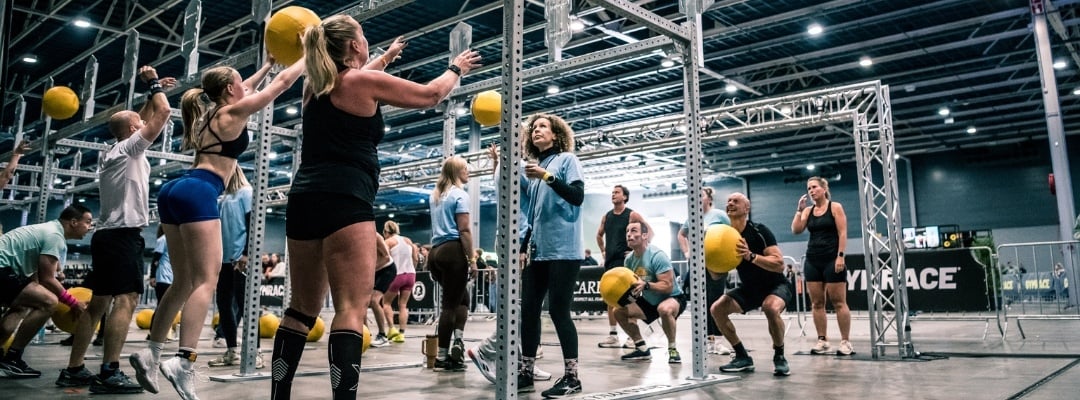
Fitness races such as HYROX and GYMRACE are no longer a niche. More and more members are training with these events in mind and expect their gym to support this type of training. A well-designed rig plays a key role in this. Not only as a training tool, but also as the central visual anchor and functional backbone of your fitness race zone.
But what should you really look for when assembling a fitness race–ready rig? And how do you make sure your rig is not only suitable today, but will continue to support your offering five years from now? In this blog post, we guide you through it step by step.
Why a dedicated rig for fitness race training?
HYROX and GYMRACE training requires a different approach than traditional strength training. Athletes combine running with functional stations such as wall balls, lunges, kettlebell carries and burpees. This means a rig must:
- withstand intensive, repetitive use
- be easily scalable for group training
- remain safe under frequent and varied loading
A standard strength setup often falls short here. A well-thought-out rig system does not.
What to consider when building a HYROX / GYMRACE rig
1. Stability and load capacity
During fitness race training, rigs are exposed to intensive and varied loads. Athletes don’t only use the rig for race-specific elements such as wall balls, but also for pull-ups, squats, presses, toes-to-bar and other compound movements. This requires a complete functional training setup, not a minimal or partial solution.
Because exercises are often performed back-to-back at high intensity, stability is not a luxury but an absolute requirement. A rig must withstand dynamic forces, repeated use and changing loads. Choose uprights with sufficient wall thickness, a robust steel construction and reliable anchoring, so the rig remains safe, stable and durable under all conditions.
2. Modularity and scalability
Your offering evolves alongside your members and their goals. You might start with small group training or general functional classes and later grow into dedicated fitness race or full race prep sessions. This requires a setup that isn’t locked into a single format, but can grow with your programming.
A modular rig provides this flexibility. By working with separate uprights, crossbars and accessories, you can expand the rig in phases. Think of adding extra pull-up positions, wall ball targets, squat stations, landmine attachments, rope climb points (trawlers) or even full pulley systems. This allows you to adapt your rig without replacing existing components or reinvesting in an entirely new setup.
This approach is not only practical, but strategic. You spread investments over time, maintain a consistent look and quality, and respond more easily to new training formats or trends such as fitness races. A well-designed modular rig ensures your space and equipment never limit your growth, keeping your training floor future-proof.
3. Mounting options: safety without permanent floor anchoring
Not every gym is able or willing to drill into the floor. This may be due to rented premises, temporary locations, listed buildings or multi-purpose sports halls. That doesn’t mean you have to compromise on safety or stability — provided you choose the right rig solution.
Depending on your space and usage, there are several options:
Freestanding rigs
These rigs stand entirely on their own and are designed with a wide footprint and smart weight distribution. When correctly configured, they are suitable for pull-ups, squats, presses and other compound movements. Freestanding rigs offer maximum placement flexibility and work best where sufficient space is available.
Wall-mounted rigs
By fixing the rig to a load-bearing wall, you gain extra stability without using floor anchors. This is an efficient solution for narrower spaces or when you want to keep the floor clear for sled lanes, carries or running routes.
Rigs with heavy base plates (no floor anchors)
When neither floor nor wall mounting is possible, rigs with heavy base plates (skid plates) provide a safe alternative. These plates increase floor contact and improve stability under dynamic loads, making them ideal for locations with strict building regulations.
By considering mounting options in advance, you avoid conflicts between safety, flexibility and future plans. A rig must be stable under load, while also fitting the practical realities of your location.
4. Flow and space usage: training without bottlenecks
Fitness race training is not only about strength and conditioning, but also about flow. Athletes move continuously from station to station, often under fatigue. Poor layout doesn’t just cost time, it also drains energy and focus.
When designing your rig and training zone, take the following into account:
Sufficient free space in front of wall ball targets
Athletes need room to squat and throw safely without interfering with others. Too little space forces technical compromises and increases the risk of errors or collisions.
Logical movement paths
Transitions from rig to sled lane, carry zone or cardio equipment should feel intuitive. Avoid crossing routes where athletes get in each other’s way, especially during group sessions or race simulations.
Space to change stations
In circuit or race-style training, multiple athletes often switch stations at the same time. Ensure there is enough room to keep moving without waiting or coming to a stop.
A well-positioned rig supports the rhythm of the session. It acts as a logical anchor within the space, without obstructing the training flow. Designing with flow in mind from the start results in a safer, more enjoyable and more efficient environment for both coaches and athletes.
Popular rig layouts for fitness race gyms
In practice, fitness race gyms and HYROX training facilities increasingly choose rig layouts that are not only strong and versatile, but also fit naturally within the training flow. The rig serves as the fixed anchor of the space — where strength, technique and movement come together.
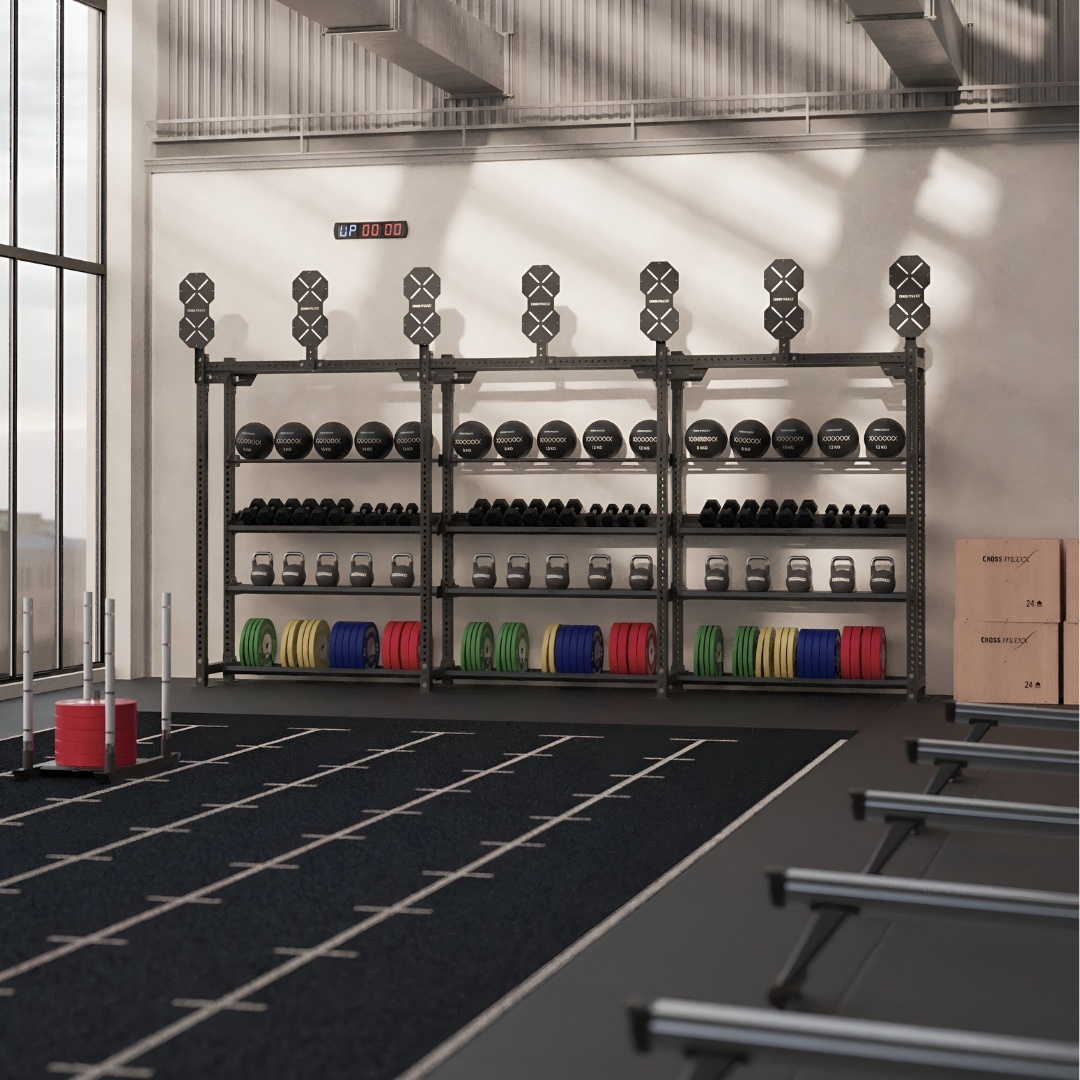
Linear rigs along one wall
A linear rig along a wall is one of the most popular solutions. It is clear, space-efficient and well suited to frequently used race stations such as wall balls.
By positioning the rig along the wall, the central floor area remains free for running routes, sled pushes, carries or conditioning blocks. This makes it ideal for gyms where space needs to be used efficiently without sacrificing functionality. Wall-mounted setups are also easy to expand with additional uprights, targets or accessories as your offering grows.
Freestanding rigs as a central island
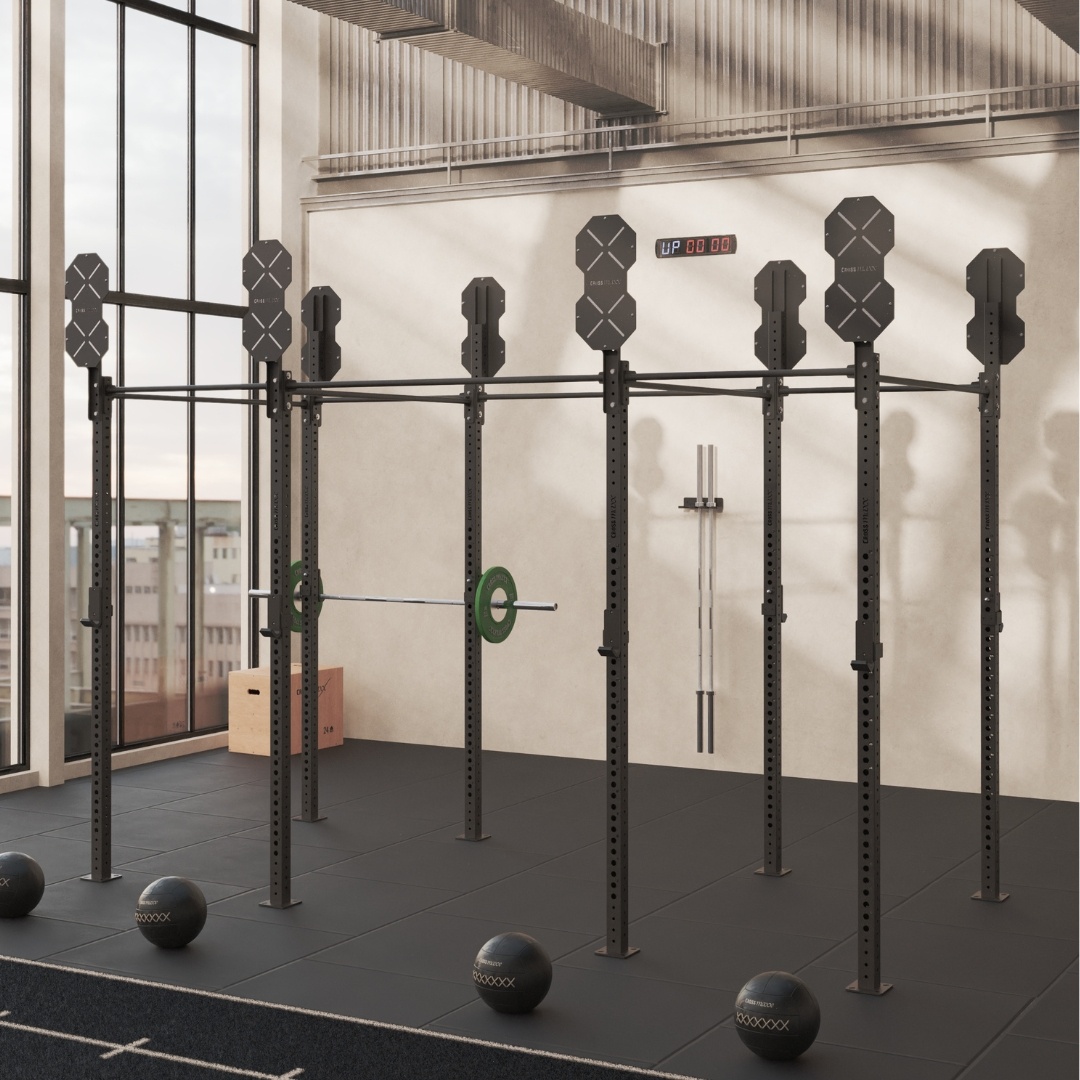
Freestanding rigs are often used as the central training hub of the gym. These island setups work particularly well for group classes, small group training and race simulations where multiple athletes use the rig simultaneously.
Because the rig is accessible from all sides, it creates a dynamic training environment where coaches maintain clear oversight and athletes can switch stations smoothly. This layout encourages variation: pull-ups on one side, squats or presses on another. The central island makes the rig both literally and figuratively the heart of the training space.
Rigs combined with sled lanes and carry routes
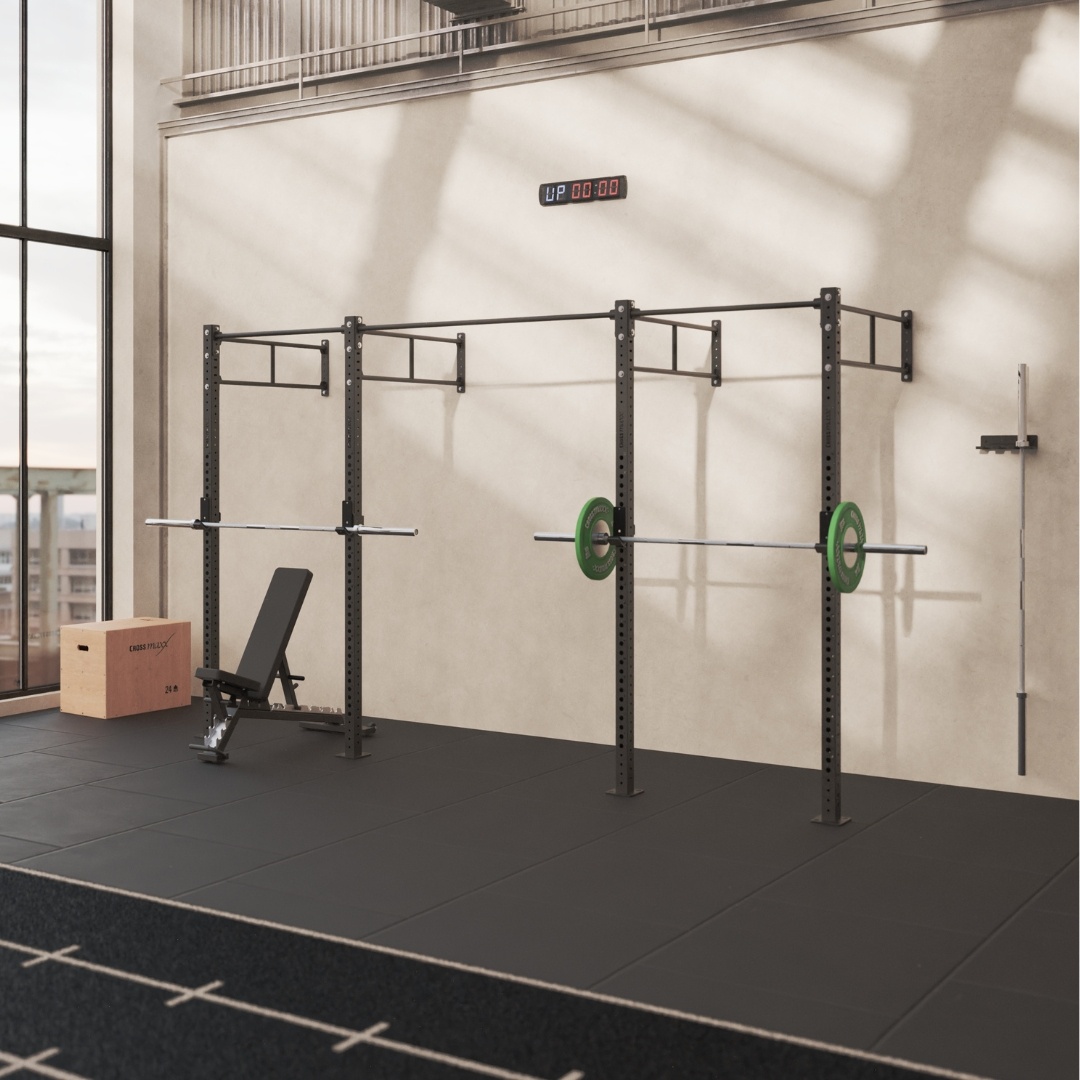
More and more fitness race gyms opt for an integrated race zone, combining rigs with sled lanes, sprint tracks and fixed carry routes. In this setup, strength and conditioning stations flow seamlessly into one another.
The rig often acts as the start or finish point for blocks such as wall balls, lunges or barbell movements, after which athletes transition directly into sled pushes, farmer’s carries or running segments. This layout most closely resembles the race experience and is ideal for dedicated HYROX and GYMRACE preparation. Clear routes and fixed stations create structure, calm and high training efficiency.
These rig layouts are not only functional, but also enhance the visual identity of the gym. They provide structure, clarity and a professional look that members immediately recognise: this is a place for purposeful, all-round training.
Would you like to know which setup best suits your space, target group and training vision? Our experts are always happy to advise on layout, scalability and a rig solution that grows with your gym.
Custom colour uprights: more than just a colour
The Crossmaxx® XL Upright Stand is now available in any RAL colour. This means your rig no longer has to adapt to standard black — instead, it adapts to your gym concept.
With custom colour uprights, you can:
- consistently integrate your branding into the training space
- create a distinctive and recognisable look
- visually define zones (for example race prep, strength or group training)
- give your gym a professional, high-end appearance
The colours are applied using a high-quality powder coating that delivers a clean, even finish and withstands intensive daily use. Scratches, wear and loss of grip are kept to a minimum, ensuring the rig continues to look strong and well maintained over time, even in busy training environments.
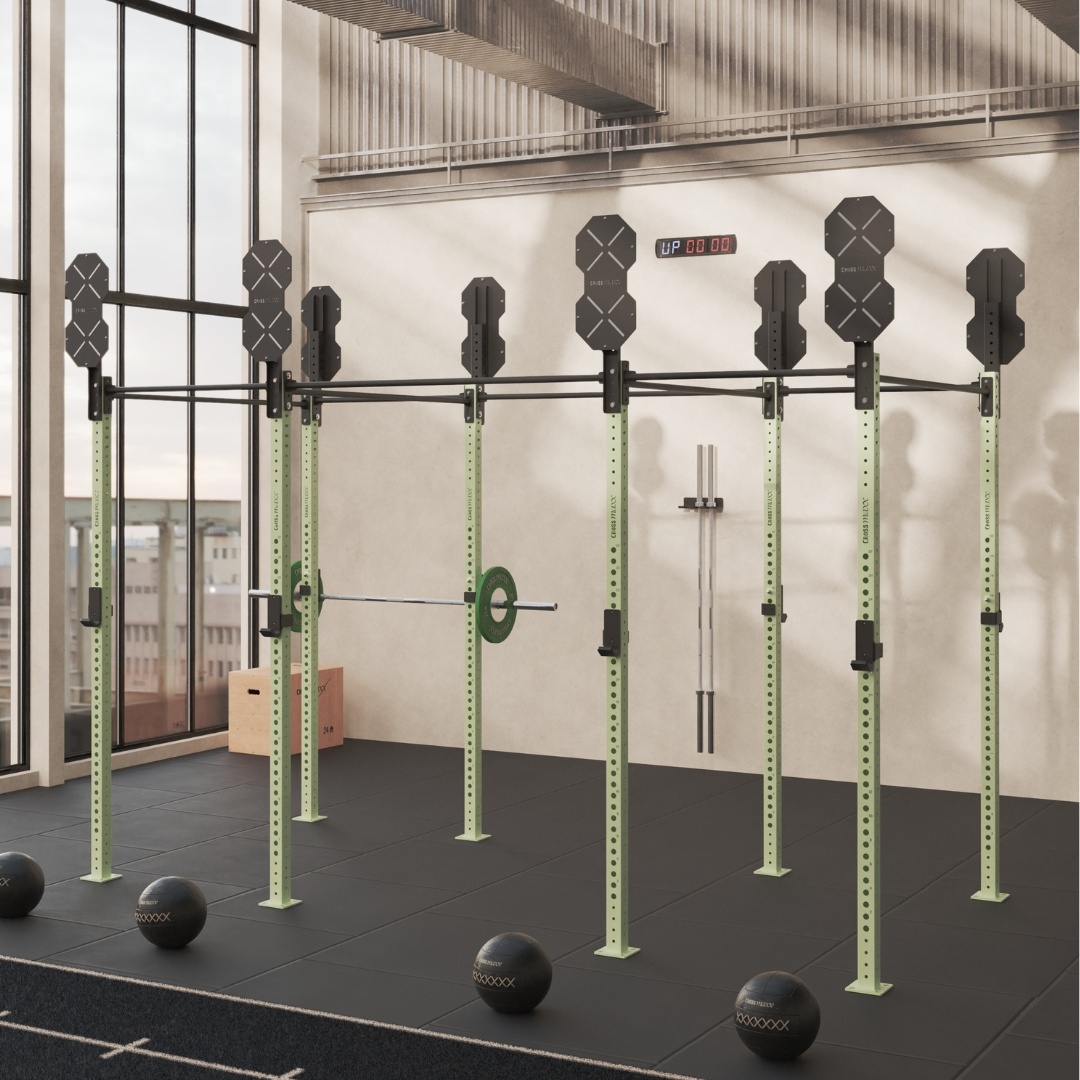
Combining custom colours with a well-designed rig layout results in a setup that is not only functionally sound, but also reinforces the identity and atmosphere of your gym.
Engineering and quality: built for intensive use
Behind the appearance of a rig lies its true quality. Crossmaxx® rigs are designed for professional environments where training takes place daily, with high loads, multiple users and frequent repetition.
Key technical features that make the difference:
- 75 × 75 mm steel uprights for maximum load capacity
- 3 mm wall thickness for extra stability, even under dynamic loads
- laser-cut numbering for fast and accurate positioning of J-hooks and accessories
- durable powder coating that provides grip and reduces maintenance
This construction ensures the rig is suitable for a wide range of training formats — from pull-ups and squats to presses, toes-to-bar and wall balls. Whether used for daily group classes, small group training or intensive fitness race preparation, the rig remains stable, safe and reliable.
Long-term maintenance and safety
With intensive fitness race training, regular inspection is essential. This includes checking bolts, mounting points and accessories. A well-designed rig system allows this to be done quickly and easily, without dismantling the entire setup. Routine maintenance extends lifespan, improves safety and prevents unexpected downtime.
Custom rigs and 3D gym design: from idea to finished setup
Every gym is different. Available space, training offer and target audience all influence which rig configuration works best. That’s why custom solutions are often the most logical choice, especially for fitness race gyms or multifunctional training spaces.
At Lifemaxx, you can:
- choose from proven rig configurations
- combine and expand components yourself
- have a fully custom rig designed for your space
Our advisors actively think along with you about routing, flow, safety and future scalability. Based on your wishes and available space, we can create a professional 3D gym design, giving you insight into:
- the exact placement of the rig
- the balance between stations and free space
- how your fitness race zone will function in practice
This prevents surprises and ensures your layout works not only today, but also as your offering evolves.
Expert installation: confidence from day one
A great rig starts with correct installation. That’s why Lifemaxx offers installation by experienced specialists.
Our experts:
- handle the full installation of the rig
- ensure correct anchoring, alignment and setup
- take floor, wall load and usage intensity into account
- deliver a safe, stable setup according to specifications
This means your rig is ready for use immediately, without compromises on safety or functionality. Whether it’s a new gym or an expansion of an existing space, you can be confident everything is installed exactly as it should be.
Checklist: is your rig fitness race–proof?
- Is the rig stable under dynamic loads?
- Can the setup grow with your offering?
- Is the mounting suitable for your location?
- Does the rig support flow and movement?
- Does the look match your gym concept?
- Can you rely on professional advice and installation?
Need help building your fitness race rig?
Every gym is different. As you’ve read above, the ideal rig setup depends on your space, target group, training formats and future plans. Not sure what works best for you? Our specialists are here to help.
Whether you want to:
- make an existing gym HYROX / GYMRACE ready
- build a dedicated fitness race zone
- design a completely new gym
Feel free to contact us for personal advice, or start designing your ideal rig yourself using our Gym builder. Together, we’ll make sure your rig perfectly fits your gym — and your members.