 / reviews

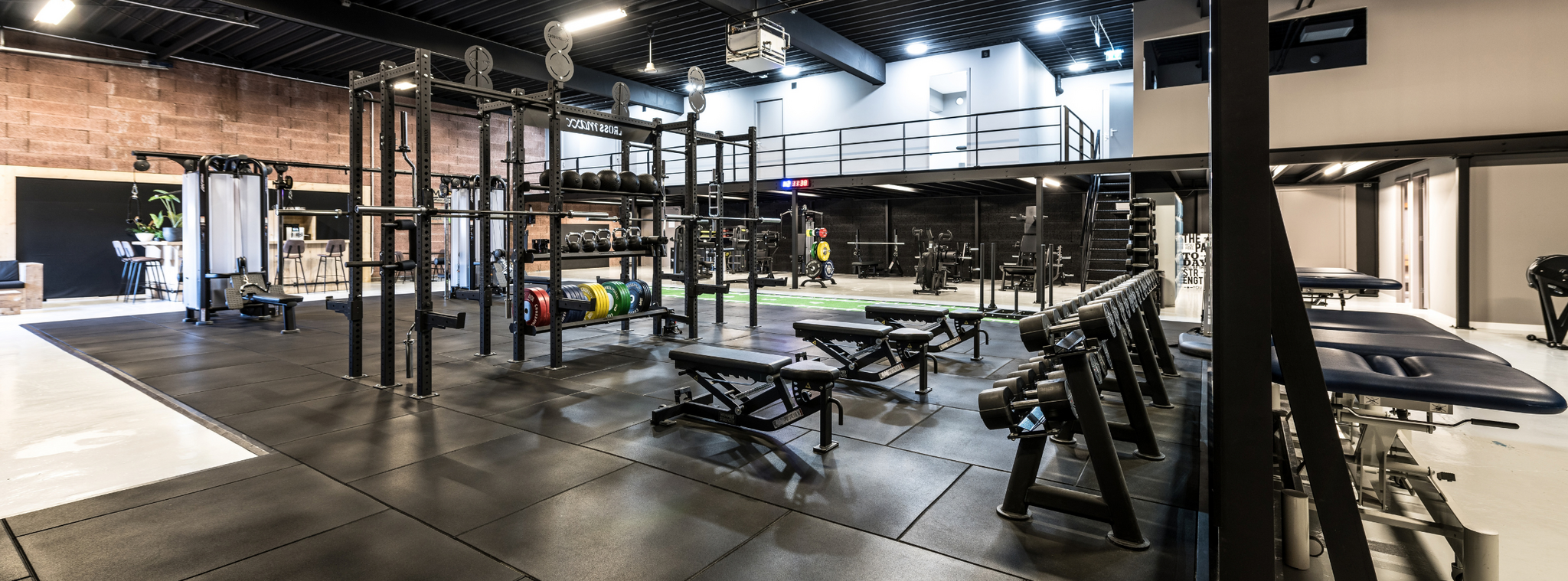
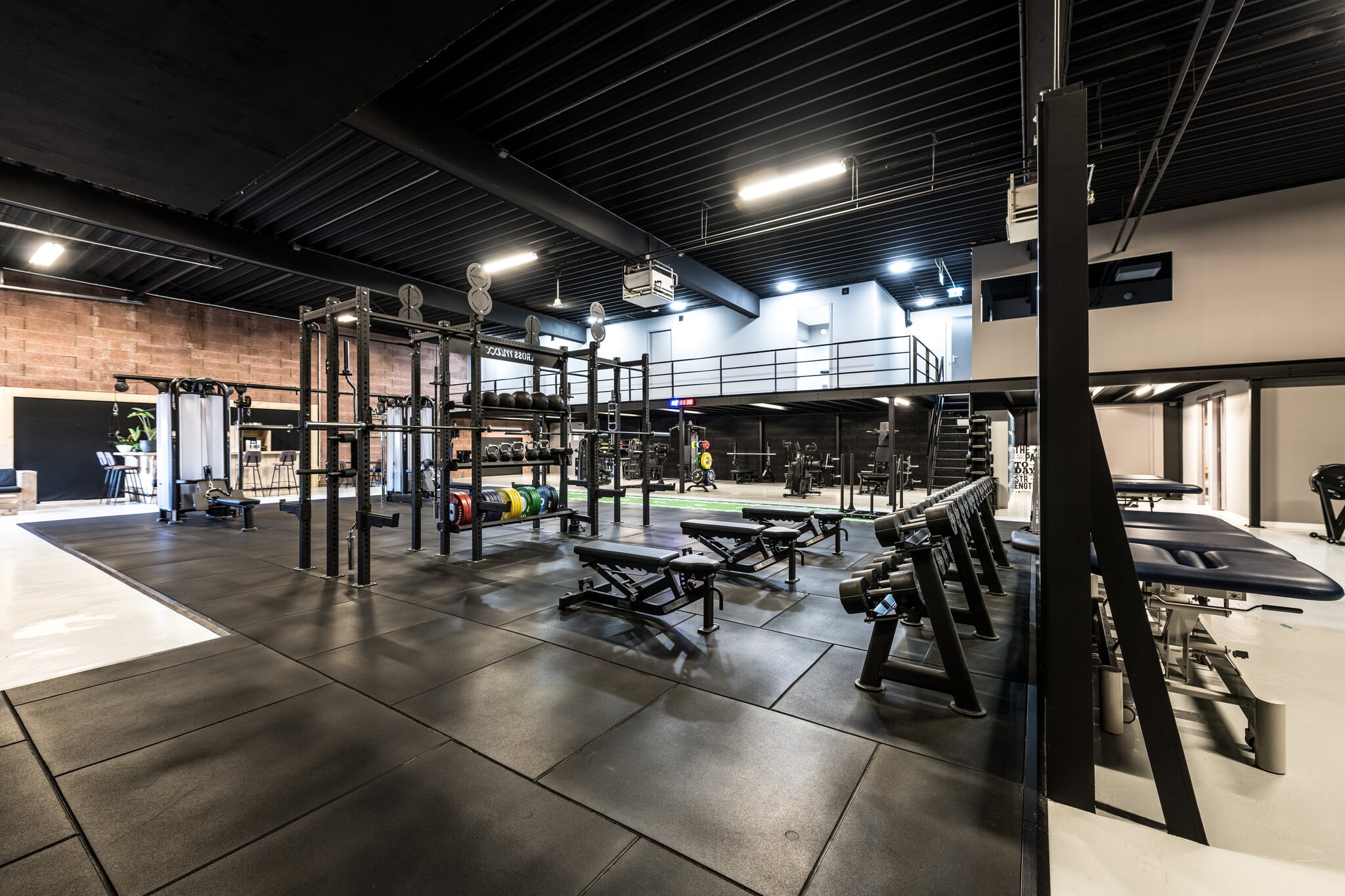
Physiotherapy and training are more closely connected than ever. While treatment may begin on the treatment table, an important part of the rehabilitation process often takes place once a client starts moving again, rebuilding strength and gradually working towards returning to everyday activities or sport. A well-designed training space can therefore be a valuable addition to a physiotherapy practice. Not simply a room filled with fitness equipment, but an environment where treatment, rehabilitation and training work seamlessly together.
But what does a space like this need? And how can you make the most of the available square metres? At Lifemaxx, we do more than supply professional fitness equipment. We also help with the layout, equipment selection and complete design of training spaces, including those for physiotherapy practices.
From treatment to movement
A client may come in with an injury, physical complaint or following surgery. As their recovery progresses, the focus often gradually shifts from treatment towards movement and progressively increasing load.
This requires a training space where exercises can easily be adapted to different abilities, stages of recovery and goals.
Equipment such as resistance bands, training tubes and power tubes can play an important role here. These types of equipment make it relatively easy to vary resistance. As a client progresses further through their rehabilitation, dumbbells, kettlebells, cable machines and other forms of strength training may also become valuable additions.
A well-designed training space makes this progression possible within the same environment.
Instead of a clear divide between physiotherapy and training, it creates a space where load can gradually be increased throughout the rehabilitation process.
Start with the space, not the equipment
A common mistake when designing a training space is deciding which equipment you want first and then trying to work out where everything will fit. We prefer to approach it the other way around.
Which clients will be training there? What types of treatment and training will you offer? How many people will use the space at the same time? Which movements need to be possible? And how much open training space do you need?
After all, a physiotherapy practice has very different requirements from a large commercial gym.
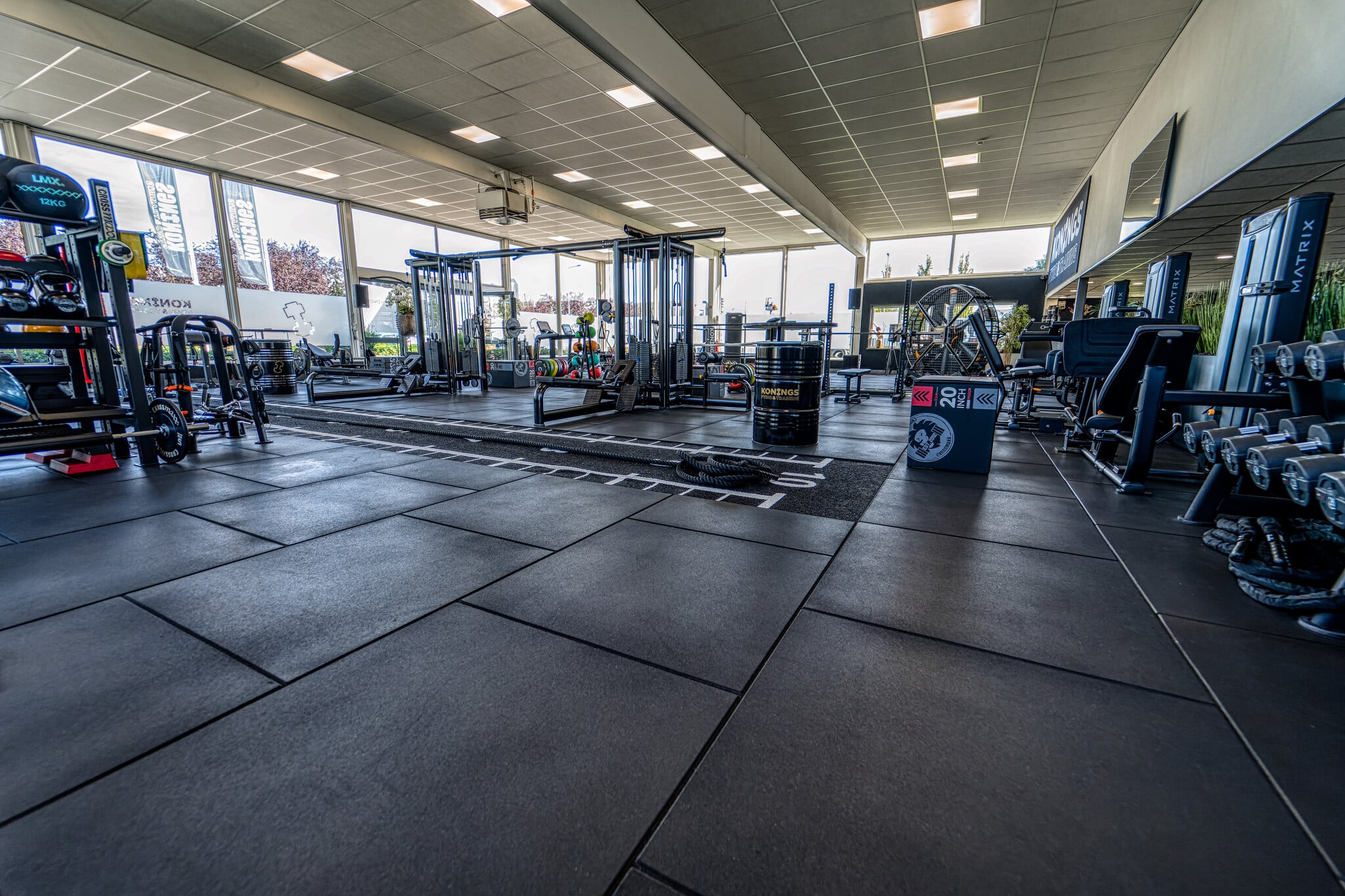
Especially when space is limited, versatility becomes important. A carefully selected cable machine, adjustable training bench and selection of free weights can offer far more training possibilities than several large machines that each serve only a limited number of exercises.
 |
 |
The floor is quite literally the foundation
Perhaps a slightly less exciting subject, but certainly no less important: choosing the right fitness flooring.
A good floor doesn't just determine the appearance of the space. Grip, stability, comfort, noise reduction, maintenance and protection of both the subfloor and your equipment all play an important role.
Not every area necessarily needs the same type of flooring either. An area used for floor-based exercises, for example, has different requirements from a strength zone where heavier dumbbells or barbells are used.
By considering this during the design stage, you can create a training space that not only looks professional but, more importantly, works safely and practically. Different flooring types or a sprint track can also be used to create clear training zones. This provides greater structure while helping you make the most of the available space.
Small equipment, big possibilities
A professional training space doesn't need to be completely filled with large machines.
Within physiotherapy in particular, compact equipment can be incredibly versatile. Consider:
- resistance bands and tubes in different resistance levels;
- dumbbells and kettlebells;
- training mats and supporting accessories;
- balance and mobility equipment;
- medicine balls and other functional training equipment.
One of the main advantages is that many of these products take up very little space and can easily be stored away. With the right storage solutions, the floor remains clear and the same area can be used for different exercises and clients.
Using a variety of resistance levels and equipment also makes it possible to adapt exercises to different abilities without needing a separate large machine for every movement.
You can take the same approach with larger training equipment. The modular Crossmaxx® XL Rigs, for example, can be configured around the available space, training goals and required functionality. This can range from a compact setup to an extensive training station with a pulley system, integrated storage or Smith Machine.
The upright stands are also available in any RAL colour, allowing the rig to be adapted not only functionally to the practice, but also visually to match its branding and interior.
This allows you to combine multiple training possibilities within one system while keeping the space flexible. If the needs of the practice change in the future, the modular system also provides opportunities to expand the setup further.
Think beyond rehabilitation
A training space can offer a physiotherapy practice much more than a place for rehabilitation alone.
If designed appropriately, the space can also be used for one-to-one training, small-group training, preventative programmes or continued coaching once a course of treatment has been completed.
This means the question during the design process shouldn't simply be:
“What do we need for the treatments we offer today?”
but also:
“What would we like to be able to offer here in a few years' time?”
Thinking about this from the outset helps prevent the space from reaching its limits too quickly.
From an empty space to a complete design
Ultimately, designing a space like this involves much more than simply creating a list of fitness equipment.
The available square metres need to be used intelligently. There needs to be enough room to move. Equipment should be logically positioned and easy to access. The right flooring needs to be used in the right areas. And the equipment itself needs to suit both the users and the way the practice operates. That's where we can help.
Together, we look at the available space, the training concept and the requirements of the practice. We can then advise on the layout and suitable fitness equipment and translate this into a personalised 3D gym design.
This allows you to see what the training space could look like before the actual fit-out begins, giving you the opportunity to adjust your choices in advance. We can then supply the equipment and, if required, take care of the installation as well.
A space where rehabilitation and training come together
A good training space within a physiotherapy practice doesn't necessarily need to be large. What matters far more is that every square metre is used with purpose.
With a smart layout, suitable flooring and a combination of multifunctional equipment and compact training tools, you can create a space where clients can continue to move and train throughout different stages of their rehabilitation. From their first light exercises through to increasingly independent and more demanding strength training.
Are you setting up a new physiotherapy practice, looking to update your current training space or wondering what's possible within the space you already have? We'd be happy to help. Visit our Gym design page or contact us for more information.
Frequently asked questions about designing a physiotherapy training space
What fitness equipment do you need in a physiotherapy practice?
The most suitable fitness equipment depends on the available space, the clients and the types of treatment and training offered within the practice. Commonly used equipment includes resistance bands, training tubes, dumbbells, kettlebells, training mats, medicine balls and balance and mobility equipment. For more extensive strength training, a cable machine, adjustable training bench, barbells or a multifunctional rig can also be added. By combining different resistance levels and types of training, clients can continue training within the same space throughout different stages of their rehabilitation.
How do you design a physiotherapy training space efficiently?
Start with the space and how it will be used rather than immediately focusing on equipment. Determine how many clients will train at the same time, which movements need to be possible and how much open floor space is required. Then choose multifunctional fitness equipment and smart storage solutions. Particularly in a smaller physiotherapy practice, this allows the same square metres to be used for different exercises and types of training.
What type of flooring is suitable for a physiotherapy practice?
The right fitness flooring depends on how each area will be used. For floor-based exercises, factors such as comfort, grip and stability are important, while a strength-training zone also needs to protect the subfloor from the impact of dumbbells, kettlebells and barbells. By combining different flooring types or adding a sprint track, you can create clear training zones and tailor each area to its intended use.
How much space do you need for a training area in a physiotherapy practice?
There is no fixed minimum number of square metres required for a functional training space. Even a relatively small area can offer plenty of training possibilities when the layout is efficient and the equipment is carefully selected. Multifunctional equipment, compact training tools, wall-mounted solutions and effective storage can help you make the most of the available space without compromising freedom of movement.
What fitness equipment works well in a small physiotherapy training space?
In a smaller space, equipment that can be used for multiple exercises is particularly valuable. Consider dumbbells, kettlebells, resistance bands, an adjustable training bench and a compact cable machine. A modular rig can also be a good option because the configuration can be adapted to the available space and required training possibilities. This helps prevent valuable floor space being taken up by several machines that each serve only one purpose.
Can a physiotherapy practice offer strength training?
Strength training can form part of the training options within a physiotherapy practice. As clients progress through their rehabilitation, resistance can gradually be increased, for example by progressing from resistance bands to dumbbells, kettlebells, cable training or barbell exercises. The exercises and level of load that are appropriate will depend on the individual client and the professional judgement of their practitioner.
Can a physiotherapy training space also be used for personal training?
Yes. The space can be designed with multiple uses in mind. A training area can, for example, be used for rehabilitation training, one-to-one training, small-group training and preventative programmes. By considering future uses from the outset and choosing flexible equipment, the space can continue to evolve alongside the practice.
Can Lifemaxx help design a physiotherapy training space?
Yes. Lifemaxx can advise on the layout, fitness flooring and selection of professional fitness equipment for your training space. Based on the available space and your requirements, we can create a personalised 3D design, allowing you to see what the finished space could look like before the fit-out begins. We can then supply the fitness equipment and, if required, take care of the installation.