 / reviews

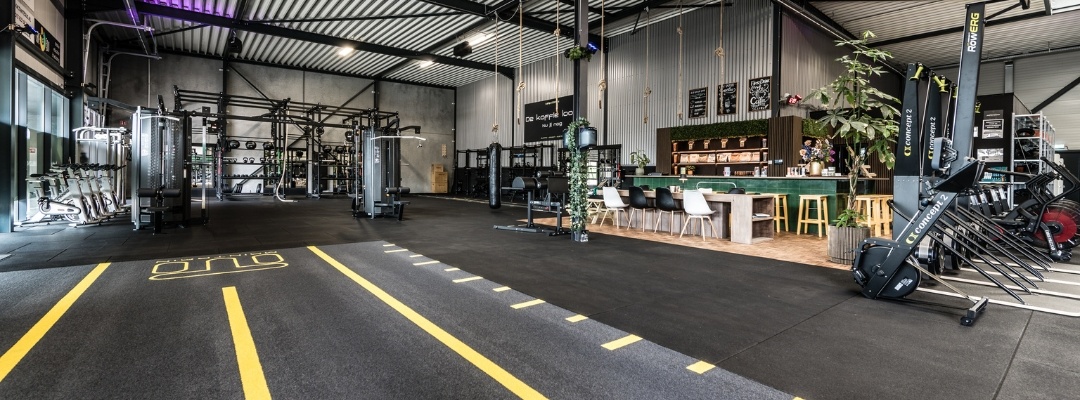
One question we get asked regularly is: “How much does it actually cost to start a gym?”
It is probably one of the most common questions asked by entrepreneurs dreaming of opening their own gym. And to be fair, it is also a difficult one to answer. You can open a great personal training studio with a relatively modest budget, while a large commercial gym will naturally require a much bigger investment. So the question isn't just how much a gym costs, but rather: what kind of gym do you want to build?
In this blog post, we will take you through the main costs involved and share tips to help you make smart choices without compromising on quality or the training experience.
There is no standard price tag
Let's get straight to the point: there is no standard price tag we can give you. A home gym is very different from a boutique studio. A boutique studio is different again from a fitness race facility or a complete commercial gym. That makes it almost impossible to put one figure on the cost of starting a gym.
The final investment depends on many different factors, including:
- the size of the space;
- the type of training you want to offer;
- the number of members or users;
- your target audience;
- the quality of the equipment;
- the finish and overall look of the space.
Your vision also plays an important role. Do you want a compact PT studio focused on personal coaching? A luxury boutique gym with an exclusive feel? Or a large fitness club where hundreds of people train every day? Every training facility has different requirements when it comes to layout, equipment and available space.
A studio welcoming twenty clients a day has very different needs from a gym where hundreds of members use the same equipment every day.
That's why it makes sense not to start with a budget, but with what you want to achieve. What kind of experience do you want to offer your members? What do you want your gym to look and feel like? And what kind of space do you need to make that happen? Once that picture is clear, you can determine the investment required.
Don't start with fitness equipment, start with your target audience
It's tempting to start thinking about equipment straight away.
Which rig do you want? How many dumbbells do you need? Will there be a cable station? Maybe even a sprint track? But before any of that, there is a much more important question to ask yourself: who are you building your gym for?
A powerlifting gym looks completely different from a boutique studio. A fitness race facility requires a different layout from a physiotherapy practice. And a hotel gym has very different requirements from a personal training studio.
The better you understand your target audience, the easier it becomes to make the right choices. Not just when it comes to fitness equipment, but also in terms of layout, flow, appearance and atmosphere.
The biggest costs when starting a gym
When people start thinking about a new gym, equipment is often the first thing that comes to mind. Understandably.
New dumbbells, a great rig, a cable station... maybe even that brand-new gold barbell? That's the fun part, after all.
But in reality, a successful gym is about much more than fitness equipment alone. The right decisions aren't made by simply filling a shopping basket, but by thinking carefully about how your space will actually be used.
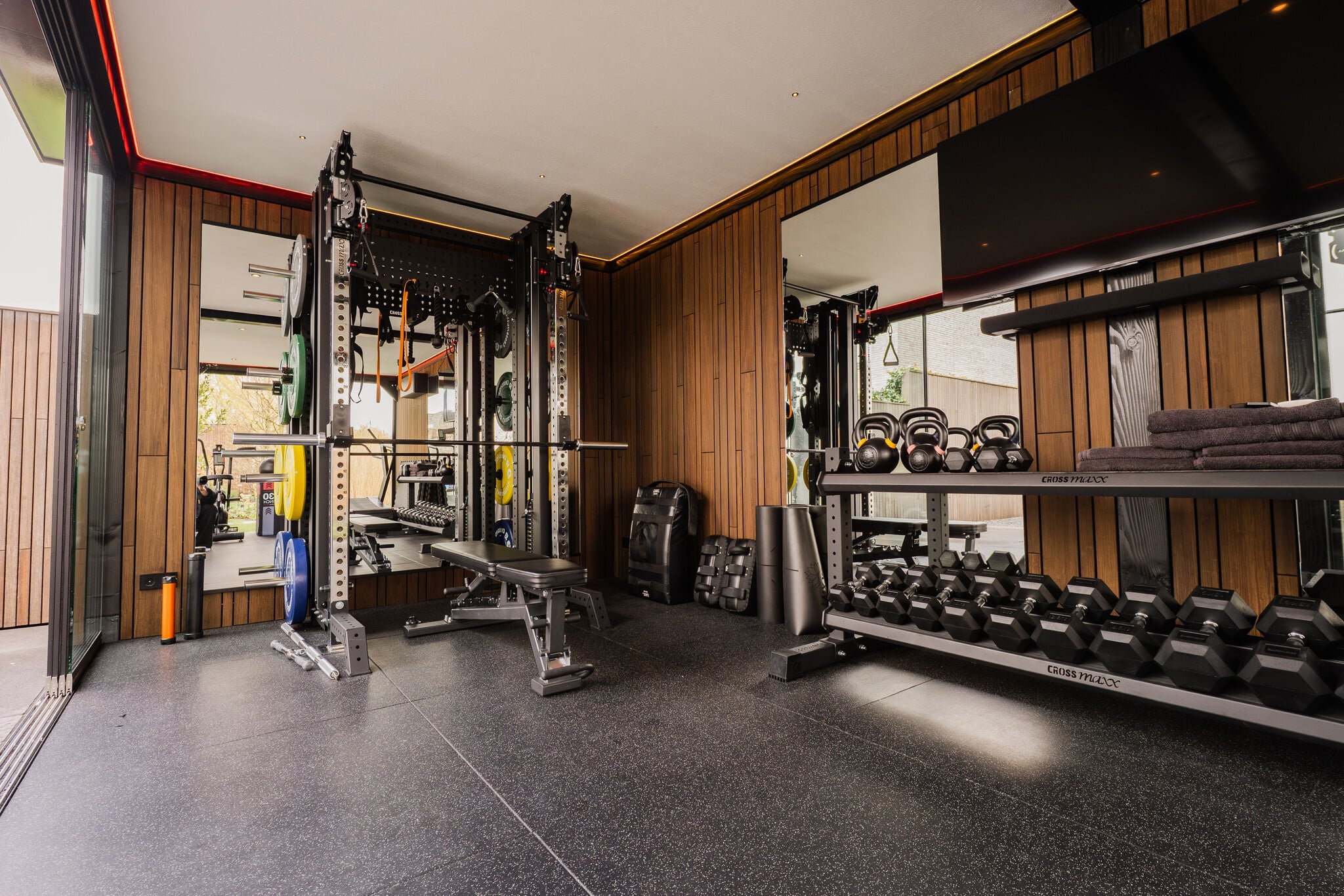 |
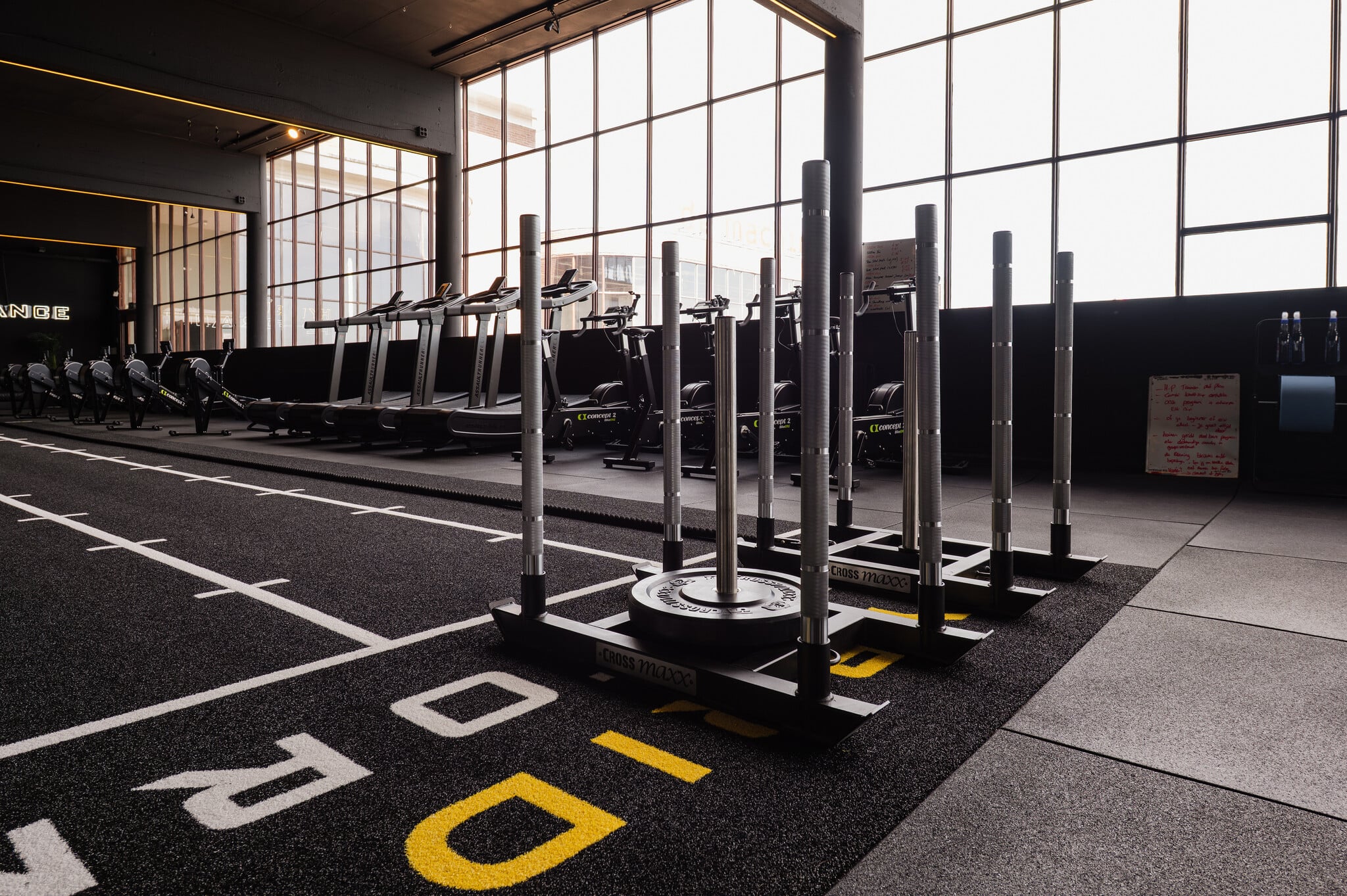 |
1. The space
Everything starts with the location. Are you buying or renting a property? Does it need renovating? Is the floor suitable for heavy loads? Is the ceiling high enough for a rig or rope climbs? Are there pillars you need to work around? And what about electricity, ventilation and lighting?
Some spaces are almost ready to use straight away. Others literally start with four bare walls. That's exactly why it pays to explore the possibilities of the space before ordering equipment. A smart layout can often get far more out of a space than simply adding more equipment.
2. The layout
Now we get to perhaps the most enjoyable part: designing the layout. And, to be fair... this is also where people can get a little too enthusiastic.
“Surely we can fit just one more machine in?”
Before you know it, the entire space is full and there is hardly any room left to actually train.
So start by asking yourself:
- What types of training do I want to offer?
- How many people will be training at the same time?
- Which equipment will be used most frequently?
- Which equipment could I add later?
- How do I want people to move through the space?
A carefully selected range of equipment often works much better than simply trying to fit in as much as possible. In fact, we regularly see gyms with thousands of euros' worth of equipment but barely any space left for a warm-up, technique work or free exercises. Yet that open training space is often used every single day.
3. The flooring
This is one of those things that is surprisingly easy to underestimate. Until the first barbell hits the floor, or the first neighbour starts complaining.
A good fitness floor doesn't just protect the surface underneath. It also reduces noise, improves safety and contributes to the overall look and feel of the space.
Different training zones also require different types of flooring. A strength zone has different requirements from a yoga or Pilates space, while a fitness race zone needs something different again from a traditional cardio area.
The floor might not be the first thing visitors notice, but it is something every athlete uses during every workout. So it's worth taking the time to get it right. Installing flooring not exactly your speciality? No problem. Our experts can professionally install your flooring, whatever challenges the space may present.
4. Storage
Storage probably isn't the first thing that gets you excited when designing a gym. Yet it can make one of the biggest differences in day-to-day use.
Every gym knows the problem: bumper plates lying around everywhere, battle ropes piled up in a corner, resistance bands that seem to disappear and dumbbells that somehow never make it back to the right place.
A good storage solution doesn't just keep the gym looking tidy. It also makes training more efficient and enjoyable. Coaches spend less time clearing up and members can find the equipment they need more quickly. And perhaps most importantly, a well-organised gym instantly looks more professional.
5. Lighting and appearance
A gym is no longer simply a place where people go to burn calories.
The overall experience has become increasingly important. People are more likely to choose a gym where they feel comfortable. A space that gives them energy. Somewhere they're proud to take a photo of their latest PR and share it on social media — great for your marketing too! — and somewhere they genuinely enjoy coming back to.
The right lighting, colours, materials and layout all play a major role in creating that first impression.
That's why more and more gyms are investing not only in high-quality equipment, but also in branding, interior design and an overall look that matches their target audience. Think of the many custom options we offer, including custom sprint tracks, Crossmaxx® rigs in custom RAL colours and LMX.® Harmony Pilates Reformers.
Because a gym people enjoy spending time in... is often a gym they want to keep coming back to.
6. Don't forget about the future
Perhaps you're starting with a PT studio today. But what if you want to introduce small-group training in two years' time? Or add a fitness race zone?
Don't just think about what you need now, but also about what you want to achieve in the future. Modular rigs, expandable storage solutions and a smart layout make it much easier for your gym to grow with your business.
A future-proof gym isn't necessarily the most expensive gym. It's the one that has been designed intelligently.
Don't save money in the wrong places
Starting a new gym is a significant investment. Especially when you're just getting started, it's completely understandable to keep a close eye on your budget. But the cheapest option isn't always the most cost-effective in the long run.
Some choices may appear to save money initially, but can end up costing considerably more over time. Think of equipment that isn't designed for intensive commercial use, flooring that starts showing wear quickly or barbells that need replacing after only a few years.
So try not to cut costs on the things that will be used intensively every day.
For example:
- equipment that isn't suitable for commercial use;
- insufficient storage, causing equipment to be left lying around and become unnecessarily damaged;
- flooring that doesn't suit the type of training;
- an inefficient layout that causes athletes to get in each other's way.
High-quality equipment often requires a larger initial investment, but it also lasts considerably longer. Especially when your gym is used intensively every day, that investment will usually pay off over time.
Design your space before buying equipment
This might be one of the smartest steps you can take. Better still: it doesn't cost you anything. With our free Gym Builder and Gym Design Service, we help you understand what's possible before you invest in fitness equipment.
Rather than immediately ordering equipment, start by determining how your space can be used as effectively as possible. That might sound slightly less exciting than choosing a new rig or that cable machine you've had your eye on for months, but trust us: a good design will give you much more in return. Perhaps even more importantly, it gives you peace of mind.
With a realistic 3D visualisation, you can see your future gym before the first piece of equipment is delivered. You'll immediately see whether the flow works, whether there is enough open training space, where storage should be positioned and what the complete facility will look like.
This prevents surprises during installation and gives you the opportunity to make changes before anything is actually built.
A well-thought-out design gives you insight into:
- how much space you actually need;
- which equipment best suits your concept;
- where storage is most practical;
- how athletes will move through the space;
- how many people can train comfortably at the same time;
- which training zones make the most sense;
- where to leave room for future expansion.
A smart design also helps prevent unnecessary purchases. Not because you would necessarily choose the wrong equipment, but because you know exactly which pieces genuinely add value to your training concept.
And perhaps the biggest advantage? You'll know exactly where you stand financially. Once the design is complete, we can provide a no-obligation quotation tailored to your project. That gives you a clear picture not only of what your future gym will look like, but also of the investment required to make it happen.
Design your own gym or work with our experts?
Perhaps you love experimenting with different layouts and trying endless combinations yourself. Or maybe you'd rather leave it to someone who designs training facilities every day.
Whichever you prefer, we offer both options.
Design it yourself with the Lifemaxx Gym Builder
Already have a clear idea of your ideal gym? With our Gym Builder, you can experiment with different layouts, add equipment and discover which set-up works best for your space. This gives you a realistic impression of your future gym at an early stage of the process.
Let us help you design it
Would you rather make sure you're not overlooking any possibilities and are really getting the most out of the available space? With our Gym Design Service, we can guide you through the entire process. From routing and training zones to equipment selection, 3D visualisations, delivery and installation.
We can take care of the complete process: from the first idea to a training facility that doesn't just look great, but works brilliantly for both you and your athletes.
Conclusion
So, how much does it cost to start a gym? There is no single answer. The final investment depends entirely on your plans, the available space and the type of gym you want to create.
But one thing is certain: a well-thought-out design will often deliver far more value than simply buying as much equipment as possible. A smart layout creates a better training experience, more efficient workouts and a space that both you and your members can enjoy for years to come.
Want to find out more about what we can do for you? Take a look at our Gym Design Service or feel free to contact us. Our team will be happy to help!