 / reviews

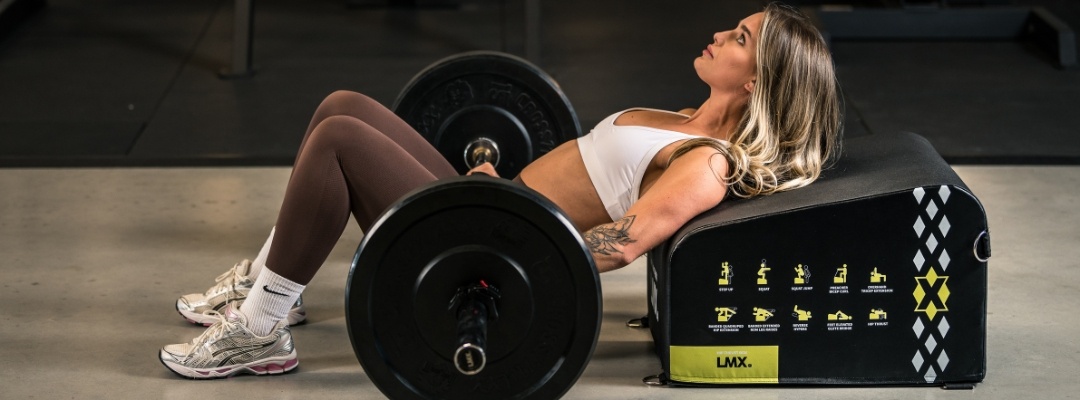
Strong glutes have been a hot topic for years. On social media, in the gym and even in the fashion industry, attention on the backside is everywhere. From scrunch leggings to carefully posed photos designed to enhance every curve. However, strong and rounded glutes are not built through filters, camera angles or clever clothing. They are developed through targeted training, consistent progression and the right equipment. And that is not only about appearance. Well-developed glute muscles play a crucial role in how you move, perform and even how your body handles everyday physical demands.
In this blog post, you will learn why glute training is so important, what to focus on and which exercises truly make a difference.
Why training your glutes is so important
The glute muscles (gluteus maximus, medius and minimus) are among the largest and most powerful muscle groups in the body. Yet in practice, they are often underused or trained incorrectly.
Strong glutes are essential for:
1. Strength and performance
Almost every powerful movement originates, at least partly, from the hips. Think about sprinting, jumping, lifting, pushing and pulling. Well-developed glutes improve force production and movement efficiency.
2. Injury prevention
Weak or inactive glutes can lead to excessive strain on the knees, lower back and hamstrings. Strong glutes help stabilise the body and distribute load more effectively across the musculoskeletal system.
3. Posture and stability
The glutes stabilise the pelvis and support neutral alignment. This helps not only during training, but also when sitting, walking and standing.
4. Functional movement in daily life
Climbing stairs, standing up from a chair or lifting something from the floor all rely heavily on proper glute function.
5. Muscle development and body shape
Aesthetics naturally play a role too. Well-trained glutes provide shape, volume and balance to the lower body.
In short, glute training is not a trend, but an essential part of a complete training programme.
General principles for effective glute training
Many people train their glutes but achieve less progress than they could. This is usually caused by a combination of poor exercise selection, insufficient activation or lack of progressive overload. The glute muscles do not function in a single direction but support multiple movements of the hip and pelvis. To train your glutes optimally and develop them fully, it is important to combine different movement patterns within your training routine. Varying how the muscles are loaded stimulates more muscle fibres and prevents training from becoming one-dimensional.
Hip extension (strength and muscle growth)
This is the primary function of the glutes: extending the hip. Exercises that strongly emphasise hip extension lead to maximum strength development and muscle growth.
Examples:
- Hip thrusts
- Glute bridges
- Deadlifts (especially Romanian deadlifts)
- Cable pull-throughs
These exercises place significant tension on the glutes, particularly in the fully contracted position.
Unilateral exercises (balance and stability)
With unilateral training, you work one leg at a time. This helps correct strength differences between left and right and improves stability and control around the hips.
Examples:
- Bulgarian split squats
- Step-ups
- Single-leg Romanian deadlifts
- Walking lunges
Unilateral exercises recruit stabilising muscles more intensely and support balanced muscle development.
Abduction (hip stability and shape)
Abduction means moving the leg away from the body. This movement primarily activates the gluteus medius, which is essential for pelvic stability and hip shape.
Examples:
- Lateral band walks
- Standing cable abduction
- Seated abduction machine
- Resistance band monster walks
Strong abductors support knee and hip stability and play an important role in walking, running and jumping.
Isolation movements (targeted activation)
Isolation exercises focus specifically on the glutes without significant involvement from other muscle groups. This improves muscle control, activation and overall shape.
Examples:
- Cable kickbacks
- Donkey kicks
- Glute-focused machine exercises
- Banded glute bridges
These movements are ideal as accessory work after compound lifts or as activation before a heavy training session.
Tension in the fully contracted position is crucial
The glutes respond strongly to tension in the fully shortened position of a movement. Therefore, control, range of motion and muscle contraction are often more important than simply lifting heavier weight. Slow, controlled repetitions with a clear squeeze at the top maximise muscle activation.
Progressive overload: the key to muscle growth
To build strong and rounded glutes, progressive overload is essential. This means gradually increasing training demand so the muscles continue to adapt and grow.
You can apply progressive overload in several ways:
- Increasing weight
- Performing more repetitions
- Adding additional sets
- Moving more slowly to increase time under tension
- Reducing rest periods
- Improving technique and range of motion
Even small increases in training load can make a significant difference in muscle growth over time.
Mind-muscle connection: training with intention
The mind-muscle connection means actively focusing on contracting the muscle you want to train. This is particularly important for glute training, as other muscles such as the lower back or hamstrings can easily take over.
You can improve activation by:
- Consciously squeezing the glutes in the contracted position
- Moving more slowly
- Performing activation exercises with bands before training
- Reducing weight temporarily to improve technique
Better muscle control leads to more effective training and improved results.
Combine compound and isolation exercises for maximum development
For optimal glute growth, combine heavy compound exercises with targeted isolation movements.
Compound exercises
- Train multiple muscle groups simultaneously
- Build strength and muscle mass
- Allow progressive overload
Examples include hip thrusts, squats and deadlifts.
Isolation exercises
- Improve muscle activation
- Refine shape and symmetry
- Strengthen weak points
Examples include kickbacks, band work and abduction exercises.
Combining both ensures development of strength, control and muscle growth — the foundation for strong, rounded and functional glutes.
The most effective exercises for strong, rounded glutes
If you want to build strong, rounded and well-developed glutes, choosing the right exercises is essential. As discussed above, an effective programme combines heavy compound lifts with targeted isolation work so the glutes are trained from multiple angles and tension profiles.
Below are some of the most important exercises that appear in nearly every effective glute programme.
Hip thrust: maximum glute activation and muscle growth
The hip thrust is widely considered one of the most effective exercises for training the glutes. It places maximum tension on the gluteus maximus, especially in the fully contracted position. This peak contraction makes it highly effective for muscle growth and developing rounded glutes.
Why the hip thrust is so effective:
- Very high glute activation
- Large potential for progressive loading
- Relatively low stress on the lower back
- Strong emphasis on hip extension
Important technique points:
- Drive through the heels
- Keep the ribcage down and core braced
- Pause briefly at the top
- Use full range of motion
Variations:
- Barbell hip thrust
- Machine hip thrust
- Banded hip thrust
- Single-leg hip thrust
Bulgarian split squat: strength, balance and symmetry
The Bulgarian split squat is a unilateral exercise that produces deep glute activation while improving stability and control. Because each leg works independently, strength imbalances become visible and correctable.
This movement is highly effective for developing shape, balance and functional strength.
Benefits:
- Corrects left-right imbalances
- Improves hip stability
- Activates deep muscle fibres
- Combines strength and mobility
For greater glute emphasis, lean the torso slightly forward and control the movement throughout.
Romanian deadlift (RDL): maximum stretch for muscle growth
The Romanian deadlift is one of the best exercises for training both the glutes and hamstrings. It creates significant tension in the lengthened muscle position, an important driver of hypertrophy.
Why the RDL is effective for glutes:
- Large hip range of motion
- Strong eccentric loading
- Continuous posterior chain tension
- Stimulates growth in the stretched position
Technique focus:
- Push the hips backwards
- Maintain a neutral spine
- Keep the weight close to the body
- Lower under control
Cable kickbacks and donkey kicks: targeted isolation
Isolation movements such as cable kickbacks and donkey kicks directly target the gluteus maximus. They are ideal for developing the mind-muscle connection and achieving strong contraction.
The constant tension from a pulley system keeps the glutes active throughout the entire movement.
Why these exercises matter:
- Maximum glute contraction
- Low joint stress
- Excellent finishing exercises
- Improve muscle control and shape
Slow, controlled repetitions deliver the best results.
Glute bridges: accessible and effective
The glute bridge is a simple yet effective exercise for glute activation. It is ideal for beginners, warm-ups or accessory work after heavy compound lifts.
Although the range of motion is smaller than in the hip thrust, the glute bridge remains valuable for muscle control and stability.
Variations:
- Bodyweight glute bridge
- Barbell glute bridge
- Single-leg glute bridge
- Elevated glute bridge
Band exercises: essential for activation and stability
Resistance bands play an important role in effective glute training. They provide additional tension, improve activation and help stabilise the hips.
Band exercises are ideal for warm-ups, technique work and adding resistance to other movements.
Effective band exercises for glutes:
- Lateral band walks
- Banded glute bridges
- Standing abduction
- Monster walks
These primarily activate the gluteus medius, which is essential for hip stability and injury prevention.
Which combination works best?
For maximum glute development combine:
- A heavy compound exercise such as a hip thrust or Romanian deadlift
- A unilateral exercise such as a Bulgarian split squat
- An isolation exercise such as kickbacks
- Activation or band exercises
By training the glutes through peak contraction, stretch, stability and isolation, you create optimal conditions for muscle growth and strength development.
The right equipment makes the difference
Effective glute training requires not only the right exercises but also the right training environment.
Think of:
- Hip thrust benches and machines for stable strength training
- Pulley systems and accessories for controlled isolation work
- Barbells and plates for progressive overload
- Resistance bands for activation and variation
- Functional accessories for unilateral training and stability
With the right setup, you can train all movement patterns effectively and build consistent progression.
Conclusion
Strong and rounded glutes are not the result of trends or quick fixes. They are built through targeted training, consistent progression and structured programming.
By combining compound exercises with isolation work, training multiple movement patterns and using the right equipment, you build not only a stronger backside but also a more stable, powerful and functional body.
Whether you train for performance, health or aesthetics, well-developed glutes are always a worthwhile investment. If you have questions about our equipment or would like to create a dedicated glute training zone in your gym, feel free to contact us for more information.
Frequently asked questions about glute training
How often should you train glutes for results?
For most people, training glutes two to three times per week works best. This provides sufficient stimulus for muscle growth while allowing adequate recovery. Ensure enough volume and progressive overload in each session.
What is the best exercise for rounded glutes?
The hip thrust is widely regarded as one of the most effective exercises for maximum glute activation and growth. For optimal results combine it with Bulgarian split squats, Romanian deadlifts and isolation exercises such as cable kickbacks.
How long does it take to see results from glute training?
Most people notice improvements in strength and activation within four to eight weeks. Visible changes in shape and volume typically appear after eight to twelve weeks of consistent training with progressive overload and adequate protein intake.
Can you build strong glutes with squats alone?
Squats train the glutes but are rarely sufficient on their own. For maximum development you need multiple movement patterns including hip extension, unilateral work and isolation exercises.
Are resistance bands effective for glute training?
Yes. Resistance bands are highly effective for activation, muscle control and supplementary training. They are particularly useful for abduction work and for adding resistance to hip thrusts or glute bridges.
What is better, hip thrust or glute bridge?
Both are effective, but the hip thrust typically allows greater range of motion and heavier loading, making it more suitable for muscle growth. Glute bridges are ideal for beginners, activation and lighter sessions.
Why can’t I feel my glutes during training?
This is often due to poor activation or technique. Try moving more slowly, squeezing at the top, performing activation drills beforehand and reducing weight to improve control.
What equipment do you need for effective glute training?
Useful equipment includes a hip thrust bench or machine, a pulley system for kickbacks, barbells and plates, resistance bands and unilateral training accessories such as a Bulgarian split squat stand.
Can you train glutes effectively at home?
Yes. With bodyweight exercises, resistance bands and optionally dumbbells or a barbell, you can train glutes very effectively at home as long as progressive overload is applied.