 / reviews

Starting, expanding or redesigning a gym may seem straightforward at first: you choose equipment, place it in the space and you’re done. In practice, however, it’s the layout of a fitness facility that determines success. Not just in how a gym looks, but more importantly in how it functions. A well-designed training space supports movement, prevents chaos during busy periods, makes optimal use of every square metre and creates a professional appearance that members immediately experience when they walk in. In a market where fitness concepts evolve rapidly and competition is everywhere, gym design is no longer a luxury, it is a strategic decision.
But how do you approach designing a gym properly? Where do you start? What mistakes should you avoid? And how do you ensure your space not only works today, but is also ready for the future? For this blog post, we spoke with Lifemaxx Gym Design expert Armin, who helps gyms, studios, physiotherapy practices and training facilities optimise their spaces on a daily basis. He takes you through the entire process: from the initial idea and layout to equipment selection, scalability and practical challenges.
Whether you are starting, expanding or upgrading a gym, this blog post will show you how professional gym design works and what you really need to consider when creating a training space that is functional, efficient and future-proof.
More than supplying equipment: the idea behind Lifemaxx Gym design
To understand what Gym design at Lifemaxx involves, it helps to first look at their role in the process. Armin explains:
“At the moment, I am Sales Manager and, together with our team of account managers and inside sales staff, I am responsible for all Lifemaxx sales.
We help customers with functional training equipment for their gym, studio, physiotherapy practice, box, hotel, corporate facility and even home use. This can range from processing a requested product list to providing fully customised advice, including site visits, 3D design and installation.”
What stands out immediately is that Gym design does not start with equipment, but with potential. How can a space function optimally? How do people move through it? Which types of training need to come together?
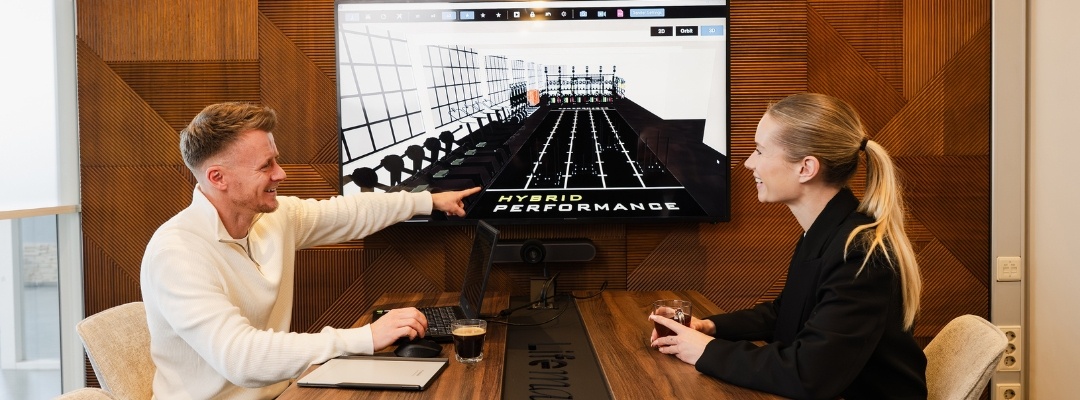
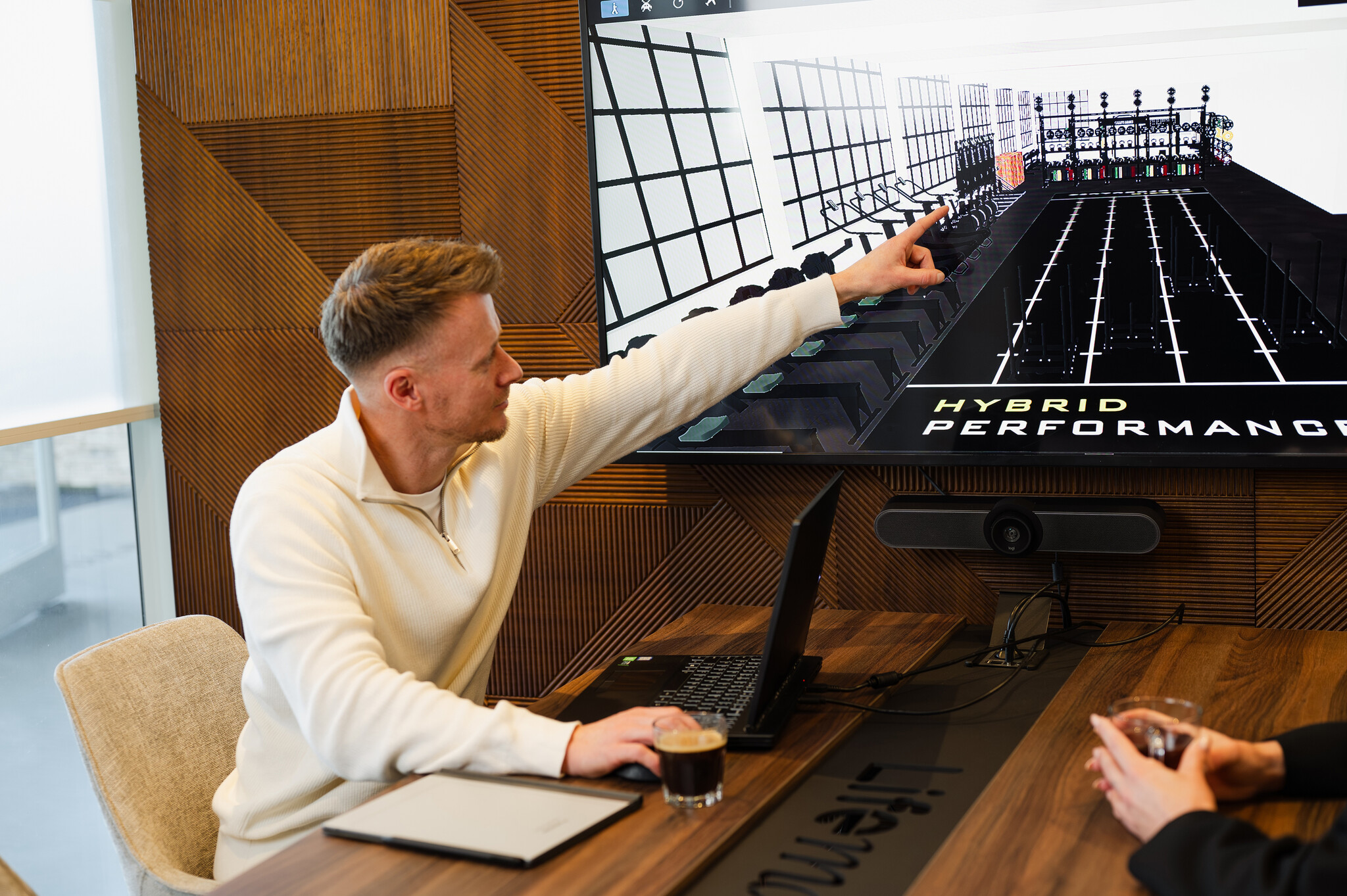
“We want to show customers the potential of their (new) space. Experience has shown that simply working through a customer’s wish list often raises too many questions. To address this, we aim to show what we can achieve in their space using our equipment. By visualising this, it becomes much easier for the customer to suggest adjustments, as they can immediately see the impact on the space.”
This visual insight is often exactly what is missing when gyms are designed independently. Equipment is selected based on need, but not always based on space utilisation or flow.
Why gym layout determines everything
Anyone who has experienced a busy gym where people constantly have to move around each other, equipment is scattered or training zones overlap knows how quickly a space can feel illogical. Layout determines not only comfort, but also safety and efficiency.
Armin explains:
“Nowadays, there is so much competition that your space needs to be right in every aspect and deliver that ‘wow’ factor. That goes beyond a nice light or a plant; the type of equipment and its positioning are just as important. Creating clear walkways, open functional areas and grouping the right equipment together is essential.”
Many gyms only realise this after they have already been set up. Everything may be there, but not logically placed.
“You often see that when a gym is designed based purely on a wish list, without a layout plan, all the necessary equipment is present, but there hasn’t been enough thought about placement. For example, separate racks and pulleys may be chosen, while the space would have been better suited to a combined solution such as the LMX1651 Crossmaxx® Dual Pulley.”
Balance also plays a key role. Too crowded and the space stops working. Too empty and the atmosphere is missing.
“A space that is too full leads to members getting in each other’s way or equipment not being used properly. Too empty and the space lacks atmosphere. Since we often advise starting with fewer equipment, we also help clients design the space in a way that avoids it feeling empty in the early stages.”
From idea to design: shaping a gym
A Gym design process often starts simply: a client with a space and a plan. But turning that plan into a functional training environment requires detailed information.
“We want to know everything about the location. If this information isn’t available digitally, we visit the site (within the Netherlands) to measure it ourselves. We also want to know when the client plans to be operational, as this can influence the recommended equipment. Sometimes a budget helps, but in most cases we start with a layout based on the discussed needs and possibilities.”
Next comes translating the training vision into a spatial layout. Whether it’s personal training, functional fitness, HYROX, a commercial gym or a home gym, each concept requires a different flow, zoning and equipment placement.
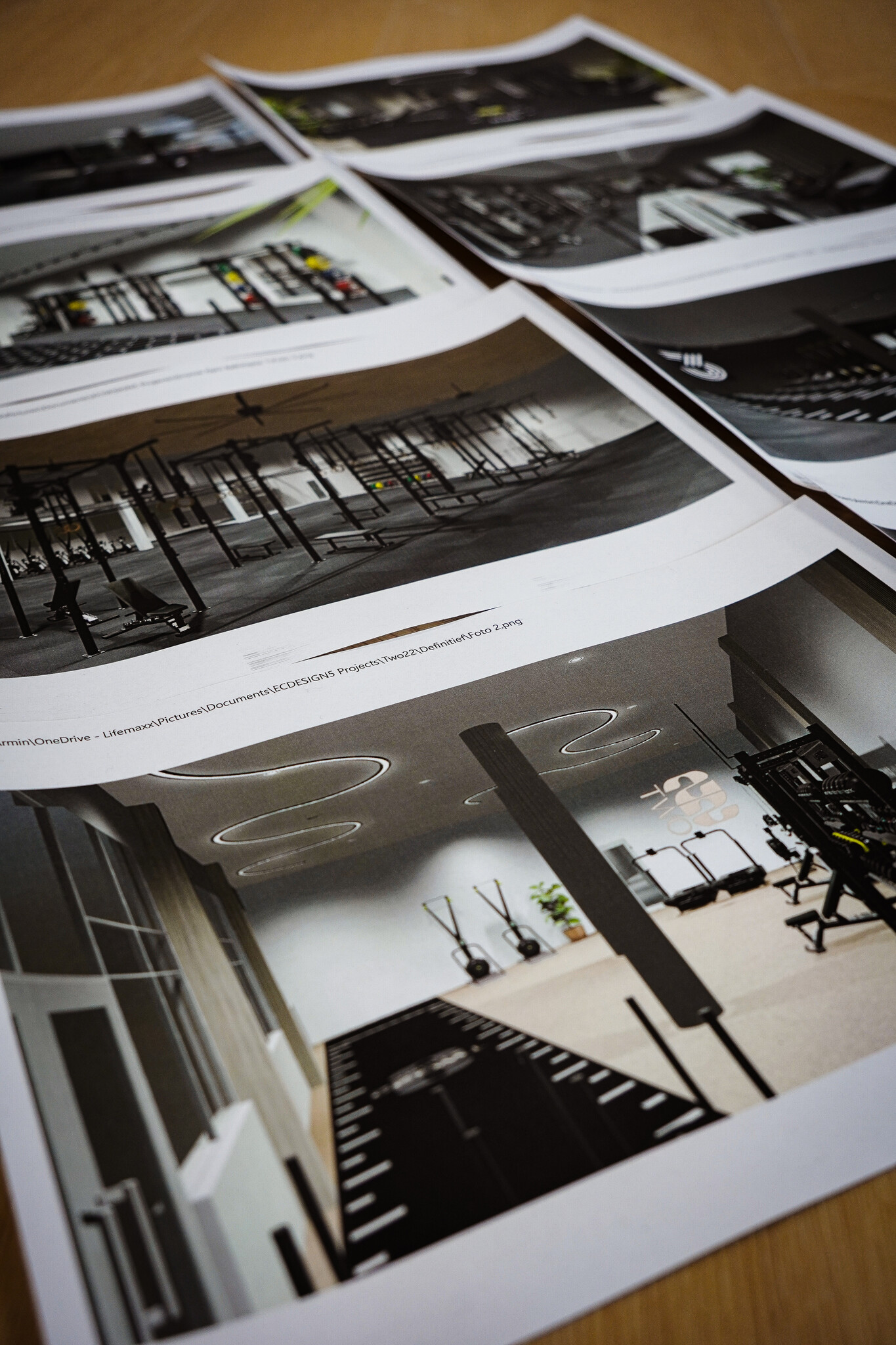
To visualise this, 3D designs are often used. Not to make it look attractive, but to make it logical.
“The main goal of creating a design is to determine the most logical layout. At first, we don’t focus on making it look ‘nice’. That only comes later, once we have a layout that works.”
A 3D design supports several practical situations. It helps when a client has a long wish list but limited space, clearly showing what fits and what doesn’t. It also helps clients who are unsure about layout but know their training concept, providing insight and supporting decision-making.
Sometimes clients come with their own layout ideas that prove inefficient in practice. In those cases, alternative designs demonstrate how the space can function better and why certain choices are more effective.
Designs are also used to assess whether a potential location is suitable for a planned gym. By mapping the space early, it becomes clear whether it aligns with the client’s ambitions.
A design is therefore not just a visualisation, but a practical tool for making better decisions before implementation.
Designing with the future in mind
A gym is never static. Members evolve, training styles change and trends shift. That’s why future growth is always considered.
“By starting with the full potential of a space, we can advise how to position equipment now while allowing for future expansion.”
This aligns with a trend Lifemaxx increasingly observes: spaces are becoming smaller, while expectations remain high.
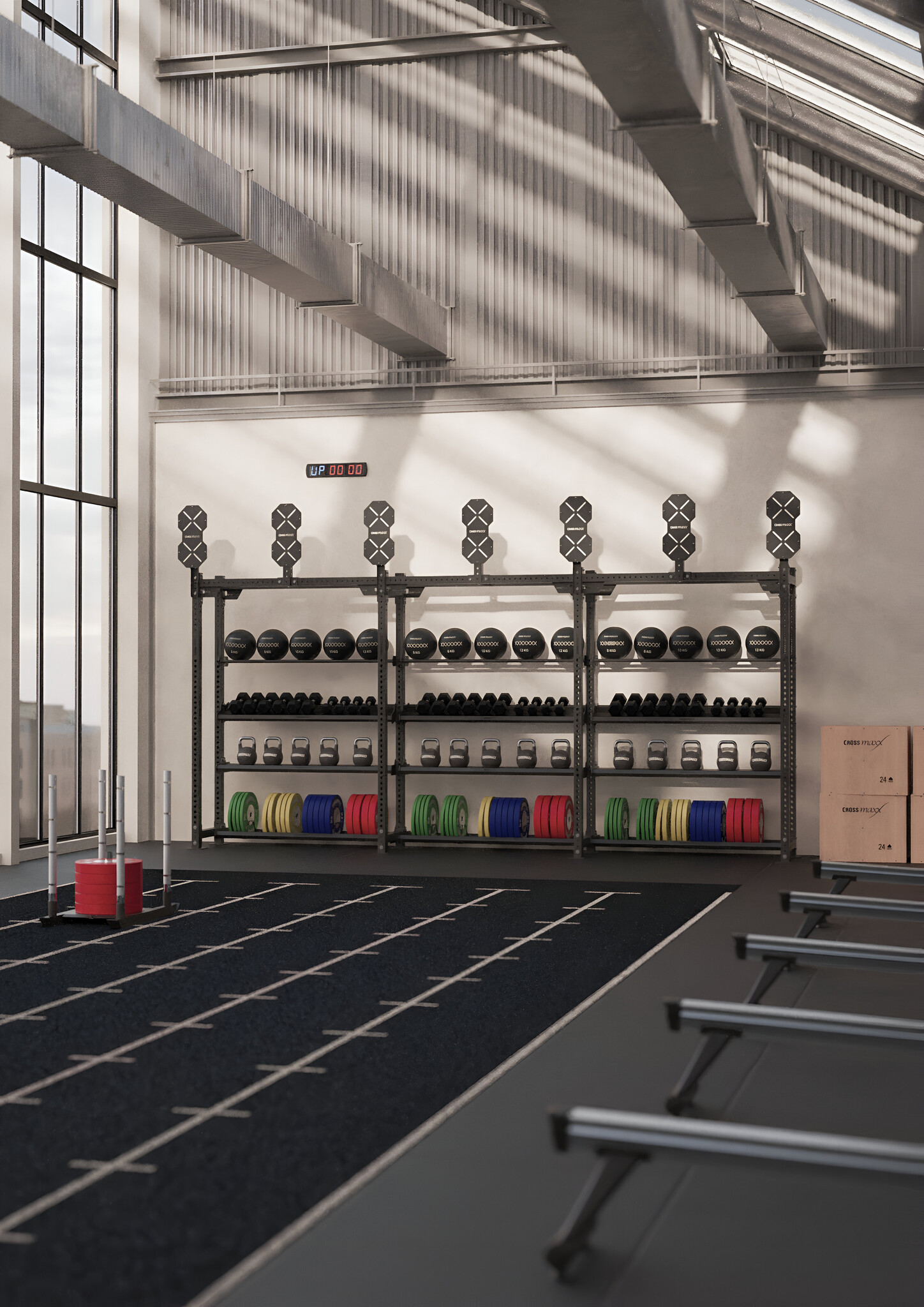
“Available spaces are getting smaller, but clients still want to offer everything. That’s why our modular systems are ideal for creating complete yet compact setups.”
Practical challenges every gym faces
No space is perfect. Some buildings are narrow, have columns, low ceilings or restrictions such as not being allowed to drill.
“With our modular solutions, we can make almost any space suitable for training.”
Even structural limitations are rarely an issue.
“When drilling is not possible, we offer alternatives such as base plates or stabilisation systems.”
Professional Gym design is surprisingly accessible
The duration of a Gym design project depends on the situation.
“It can vary significantly. Some projects, from request to delivery, take just two weeks. Others, where the building is still under construction, can take over a year. However, because we supply many products from stock, we can move quickly.”
Even more surprising:
“This service is completely free of charge. We do this to show clients what is possible and to help prevent mistakes when a wish list does not align with the space or goals. We also advise clients to sometimes start smaller, rather than investing everything upfront. A gym grows with its members, so investments can grow alongside it. This creates long-term partnerships and gives clients financial flexibility.”
The most important advice for gym owners
Experience in training does not automatically mean experience in space design, and according to Armin, this is one of the biggest pitfalls.
“Get advice. Being a great trainer does not mean you understand the best possible layout.”
Waiting too long to update or improve your space can also be a disadvantage.
“The fitness industry evolves constantly. Don’t hold on to an outdated layout. Follow trends and keep your members engaged. Improvements don’t always require a large investment. Small changes can already create new training opportunities and keep members motivated. If everyone around you evolves and you don’t, you will eventually lose members.”
Why good Gym design is ultimately about growth
The true goal of Gym design is not just to create a visually appealing space, but one that continues to perform.
A space that grows with your members, supports new training concepts and remains efficient, even at peak times.
At Lifemaxx, long-term thinking is central. Sometimes, we advise clients to start with a smaller investment. A gym develops over time, alongside its members and ambitions.
“This approach is not always immediately understood commercially, but we believe it is the best long-term strategy. By supporting clients honestly from day one, we build lasting partnerships.”
Do you only work with Lifemaxx equipment?
A common question is whether Gym design is only possible with Lifemaxx equipment.
“We use software that includes equipment from almost all major fitness brands, which allows us to incorporate existing or third-party equipment into the design.”
This means the design is always focused on the best possible layout and functionality.
“At the same time, the goal is to create a training environment where Lifemaxx equipment plays a role. We do not redesign spaces without any intention of adding new equipment, but we do optimise layouts to create space for functional Lifemaxx solutions.”
Conclusion
Starting or redesigning a gym is not just about equipment. It’s about flow, experience, functionality and future-proofing.
Professional gym design translates vision into reality. And that is what makes the difference between a space with equipment… and a space that truly works.
Want to learn more about our Gym design service or explore what we can do for your space? Get in touch with us for more information.
Frequently asked questions about starting or designing a gym
How do you start your own gym or fitness studio?
Starting a gym begins with a clear vision of your target audience, training concept and location. From there, you determine the layout of the space, the required equipment and your budget. Professional Gym design helps you make the most of your available space and allows for future growth.
What should you consider when designing a gym?
The most important factors when designing a gym are:
- logical layout and walkways
- sufficient functional training space
- safety and stability of equipment
- flexibility for different types of training
- the ability to expand in the future
A well-thought-out design prevents the space from feeling either too crowded or too empty.
Why is gym layout so important?
The layout determines how efficiently people can train, how safe the space is and how the gym feels overall. A poor layout can lead to congestion, unsafe use of equipment and inefficient use of space.
What does it cost to have a gym designed?
At Lifemaxx, Gym design is a free service. The design is created to provide the best possible advice for setting up your training space and to help you understand the full potential of your space.
How long does a Gym design process take?
The duration of a Gym design process can vary from a few weeks to over a year, depending on the situation. If the space is already available, the process can move quickly. If the building still needs to be constructed, the timeline will naturally be longer.
What equipment do you need to start a gym?
This depends on the type of gym. Common essentials include:
- rigs and/or racks
- barbells and plates
- cardio equipment
- functional training equipment
- storage systems
The right combination depends on your target audience, training concept and available space.
How do you design a small gym efficiently?
In smaller spaces, modular and multifunctional systems are essential. By placing equipment strategically and choosing versatile solutions, you can fully utilise even limited space.
Can you design a gym without drilling into floors or walls?
Yes. If drilling is not allowed, stabilisation plates or freestanding structures can be used. This ensures the equipment remains safe and stable without permanent installation.
How do you make sure a gym is future-proof?
By taking the following into account during the design phase:
- possibilities for expansion
- modular systems
- changing fitness trends
- growth in membership
A flexible design prevents the need for major renovations in the near future.
What is the difference between setting up a gym yourself and using professional Gym design?
When setting up a gym yourself, equipment is often chosen based on preference. Professional Gym design focuses on space utilisation, flow, safety and scalability. This helps avoid costly adjustments later and ensures a more efficient training environment.
When is it time to upgrade your gym?
It may be time to upgrade your gym when:
- the layout is inefficient
- membership numbers are increasing
- your training offering changes
- equipment is outdated
- the look and feel no longer matches the market
Even small changes can significantly improve the experience and usability of your space.
Can Gym design also be applied to existing gyms?
Yes. Gym design can be applied to new gyms as well as to the redesign, expansion or optimisation of existing training spaces.
What is the first step if you want your gym designed?
The first step is to map out:
- the space and its dimensions
- the training concept
- number of users
- must-have equipment
From there, a layout and design can be created.
Why do gyms choose Lifemaxx Gym design?
Because Lifemaxx goes beyond supplying equipment. We think along with you about the complete layout, scalability and functionality of your space. The goal is to create a training environment that works efficiently and grows with your gym.