 / reviews

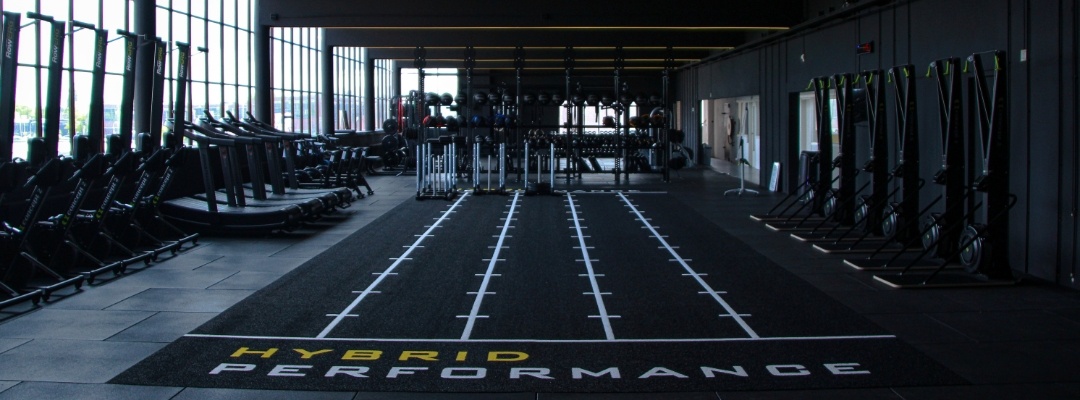
Fitness racing is growing rapidly. Training concepts such as HYROX and GYMRACE are attracting more and more athletes, and as a result, an increasing number of gyms are adding dedicated fitness race zones to their facilities. But as soon as the first plans are made, one question almost always comes up: how much space do you actually need for an effective fitness race setup?
The answer is not as simple as assigning a certain number of square metres. A successful fitness race zone is not just about space; it is about flow, routing, safety and making the most efficient use of the available area. A compact space can work exceptionally well when designed correctly, while a larger area can feel inefficient if stations are not positioned logically.
In this blog post, we explain what you really need to consider when designing a fitness race zone, from minimum space requirements and movement routes to the integration of rigs, sprint tracks and functional training stations.
Why fitness race training requires a different approach to space planning
Traditional gyms are often designed around individual training stations. Fitness racing, however, is all about connecting those stations.
Athletes move continuously throughout the space, transitioning between strength, cardio and functional exercises. Think sled pushes, wall balls, farmer carries, lunges and sprint intervals. This means a fitness race zone needs to accommodate not only the exercises themselves, but also the movement between them.
Anyone who has trained in a crowded gym where members constantly have to avoid each other or where training routes overlap knows how important a logical layout can be. A well-designed fitness race zone should:
- Support natural athlete flow
- Prevent bottlenecks
- Keep walkways clear
- Provide safe training distances
- Allow multiple athletes to train simultaneously
- Create structure and clarity during high-intensity sessions
For this reason, fitness racing requires a completely different approach to space planning than traditional strength training.
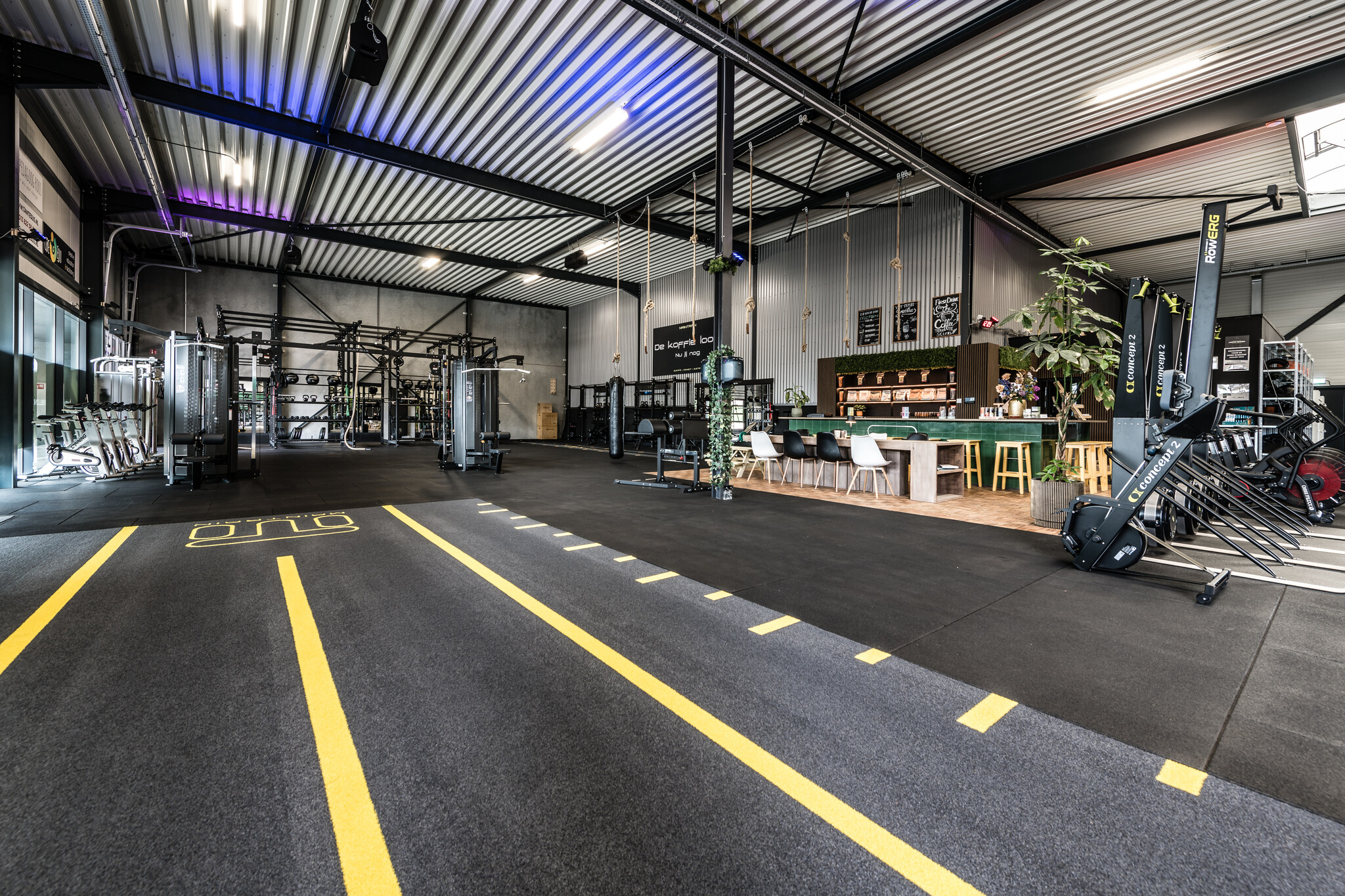
How much space do you need?
There is no fixed minimum size for a fitness race zone. The amount of space required depends on several factors:
- The number of athletes training simultaneously
- Available routing options
- The equipment selected
- The training philosophy of the facility
However, fitness race zones can generally be divided into three categories.
Compact Fitness Race Zone (Approx. 50–100 m²)
A compact fitness race zone can be surprisingly effective when designed intelligently.
This type of setup is commonly found in:
- PT studios
- Boutique gyms
- Existing fitness facilities
- Small group training spaces
Within this footprint, you can typically include:
- A compact rig
- Wall ball targets
- Kettlebells
- Sandbags
- Dumbbells
- A narrow sprint track
In smaller spaces, efficient use of every square metre is essential. Modular rigs and multifunctional equipment can make a significant difference.
Medium Fitness Race Zone (Approx. 100–250 m²)
At this size, there is considerably more freedom to create effective routing and athlete flow.
Possible additions include:
- Longer sprint tracks and sled lanes
- Carry routes
- Multiple training stations
- Group training sessions
- Race simulations
This type of space also allows strength and cardio zones to be separated more effectively, improving both safety and the overall training experience.
Many fitness race facilities in this category combine:
- Rigs
- Sleds
- Cardio equipment
- Functional training areas
- Storage solutions
Full Fitness Race Gym (250 m²+)
Larger facilities allow for the creation of a fully specialised fitness race gym.
Examples of features include:
- Extensive sprint tracks with multiple sled lanes
- Integrated race routing
- Large rig configurations
- Dedicated strength zones
- Warm-up and recovery areas
- Full HYROX or GYMRACE simulations
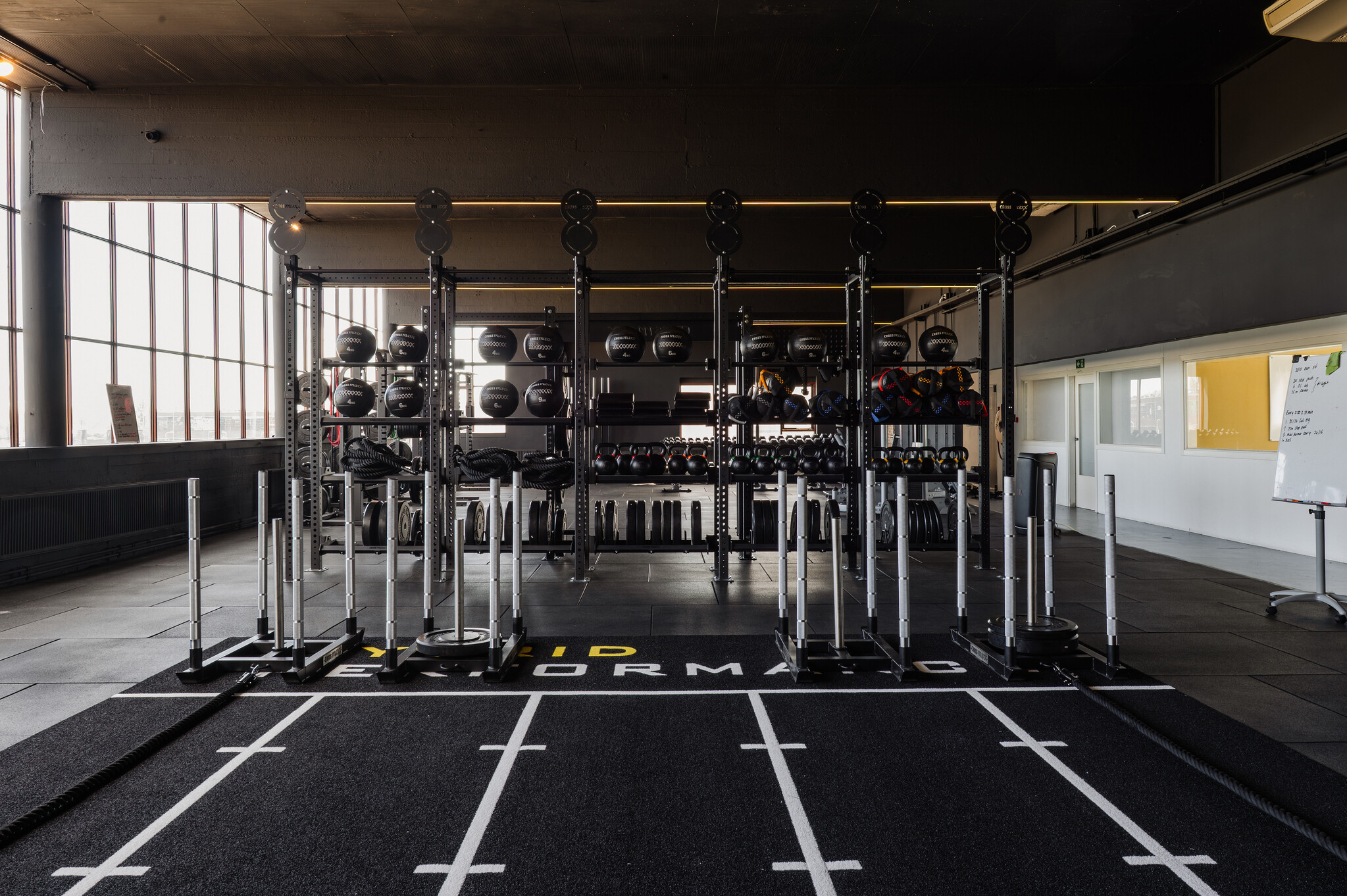
A great example is Hybrid Performance in Zaandam, a performance-focused fitness race facility designed and equipped by Lifemaxx.
Which elements require the most space?
Not every piece of fitness race equipment requires the same amount of space. Some stations are relatively compact, while others need significant clearance to function safely and effectively.
Sprint tracks
Sprint tracks often form the backbone of a fitness race zone and are used for:
- Sled pushes
- Sled pulls
- Sprint training
- Lunges
- Carries
As a result, the sprint track frequently determines the overall routing of the facility.
Rigs
Rigs often serve as the central hub of the training space. Exercises commonly performed around rigs include:
- Wall balls
- Pull-ups
- Squats
- Presses
- Lunges
- Toes-to-bar
A well-positioned rig supports the flow of training without obstructing movement throughout the facility.
Carry routes
Farmer carries and sandbag lunges often require more space than initially expected. During group sessions, poorly planned carry routes can quickly create congestion.
Cardio zones
Machines such as SkiErgs, rowing machines and curved treadmills are often integrated into fitness race training spaces. Sufficient clearance around these machines is essential to allow athletes to move safely between stations.
Why routing is more important than adding more equipment
One of the most common mistakes when creating a fitness race zone is simply trying to fit in as much equipment as possible.
More equipment does not automatically create a better training environment.
In fact, overcrowded spaces often lead to:
- Clutter
- Bottlenecks
- Unsafe situations
- Restricted movement
- Inefficient training sessions
A successful training space depends on clear movement routes, open functional areas and logical equipment placement.
A well-designed fitness race zone should feel intuitive the moment athletes start training.
Common mistakes when designing a fitness race zone
When designing fitness race facilities, we regularly see the same mistakes repeated:
Too much equipment in a small space
An overcrowded training area limits freedom of movement and creates frustration during busy periods.
Ignoring athlete flow
When training routes cross each other, congestion occurs and workout flow suffers.
No room for future expansion
Fitness racing continues to grow rapidly. Facilities should be designed with future growth in mind.
Poor separation between strength and cardio areas
When cardio equipment is positioned too close to functional training zones, the space can quickly feel chaotic.
Insufficient storage
Equipment left on the floor affects not only aesthetics but also safety and efficiency.
How to design a compact fitness race zone
Limited space does not have to limit functionality.
In fact, many modern fitness race studios intentionally focus on compact, highly efficient layouts.
Effective solutions include:
- Modular rigs
- Integrated storage
- Multifunctional training zones
- Vertical storage systems
- Compact cardio setups
Modular systems are particularly valuable because they allow facilities to adapt and grow over time.
From a race zone to a complete fitness race gym
In addition to supplying equipment, Lifemaxx helps facilities design complete fitness race environments.
From routing and athlete flow to rigs, sprint tracks and functional training areas, every project is tailored to:
- Available space
- Target audience
- Training style
- Future expansion plans
- Overall look and feel
Using professional 3D visualisations, we help clients see exactly how their space can be optimised before installation begins. The result is not only a visually appealing gym but, more importantly, a training environment that works efficiently in practice.
Conclusion
The amount of space you need for a fitness race zone ultimately depends less on the number of square metres available and more on how effectively that space is used.
A successful fitness race zone is built around:
- Flow
- Routing
- Safety
- Scalability
- Training experience
Whether you are adding a compact functional area to an existing gym or building a fully specialised fitness race facility, thoughtful design is what transforms a room full of equipment into a space that truly works.
Would you like to know which fitness race setup best suits your facility? Get in touch with our team or discover our Gym design service.